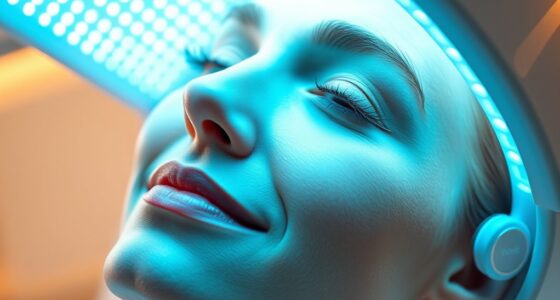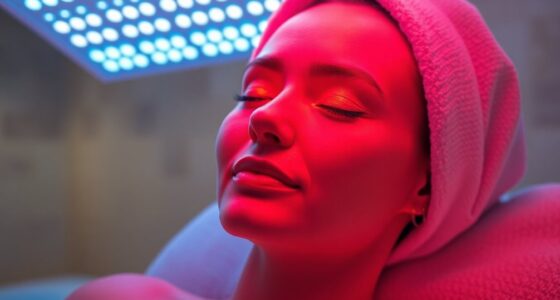
Light therapy is a safe, effective way to complement traditional treatments for mood and sleep issues. It helps regulate your circadian rhythm, boosts energy, and lifts mood, especially during darker months. When used alongside medication or therapy, it can enhance overall results. Just follow recommended guidelines, and consult your healthcare provider if you have eye or mood concerns. To discover how to integrate light therapy into your plan, keep exploring these valuable options.
Key Takeaways
- Light therapy enhances traditional treatments for mood and sleep disorders, offering quick relief and mood stabilization.
- It supports the resetting of circadian rhythms, complementing medication and therapy for improved overall outcomes.
- Used alongside conventional methods, light therapy can improve sleep quality and energy levels more effectively.
- Combining light therapy with traditional treatments provides a holistic approach to managing mental health conditions.
- Always consult healthcare providers to safely integrate light therapy into existing treatment plans and avoid adverse effects.
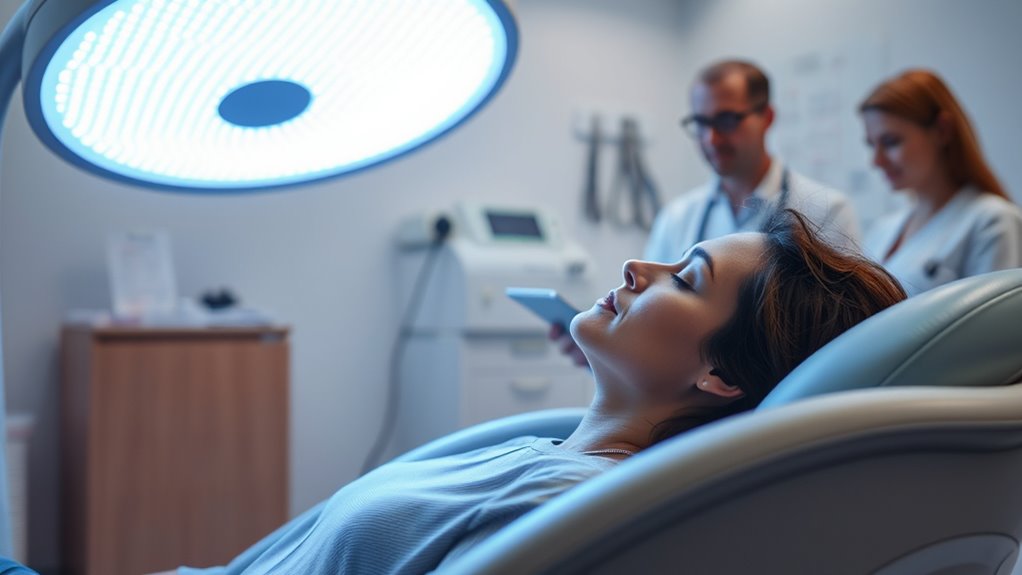
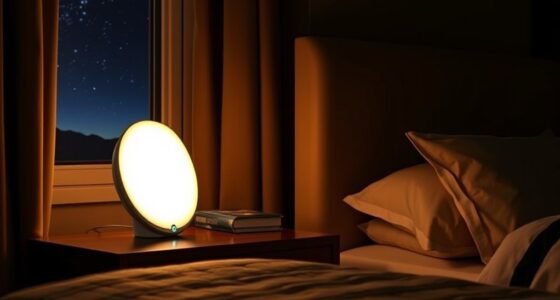
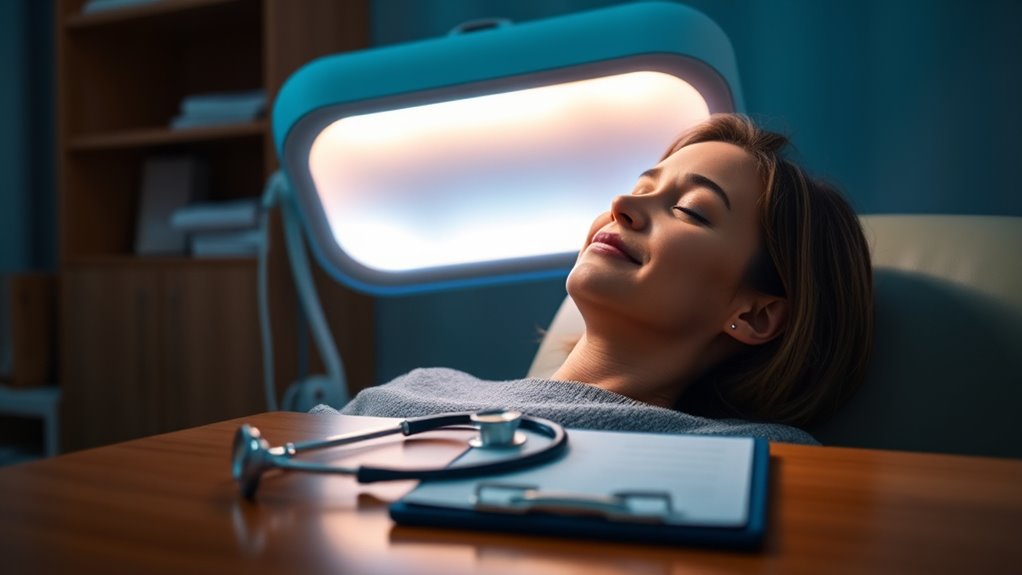
Light therapy has gained recognition as an effective complementary treatment for various mental health and sleep disorders. If you’re struggling with seasonal affective disorder (SAD), you’ll find that using a light box can markedly help lift your mood during darker months. By mimicking natural sunlight, light therapy can influence your brain’s chemical signals, reducing feelings of depression associated with seasonal affective disorder. It’s a non-invasive, easy-to-use approach that complements traditional treatments like medication or therapy, often providing quick relief when symptoms are most intense. Incorporating light therapy into your routine can also lead to noticeable sleep improvement, especially if you experience difficulties falling asleep or waking up feeling unrefreshed. The bright light helps regulate your circadian rhythms, which are your body’s internal clock governing sleep-wake cycles. When these rhythms are aligned properly, you’re more likely to fall asleep easily and enjoy restful nights.
You might wonder how light therapy fits into your overall treatment plan. It’s designed to be used daily, usually in the morning, to simulate sunlight and reset your internal clock. This process can be particularly beneficial if you notice your mood dips during the winter months or if your sleep patterns are irregular. The key is consistency—using the light box regularly can give you steady results and reinforce the effects of other treatments. For those already taking antidepressants or undergoing therapy, light therapy acts as a supportive tool rather than a replacement. It’s safe for most people, but you should consult your healthcare provider before starting, especially if you have eye conditions or bipolar disorder, since light exposure can sometimes trigger manic episodes.
Besides mood and sleep improvements, light therapy can also enhance overall energy levels and focus. When your circadian rhythm is properly synchronized, you often find it easier to manage daily tasks and maintain a positive outlook. Using the light therapy device for about 20 to 30 minutes each morning is usually enough to see benefits, but it’s essential to follow the manufacturer’s instructions or your doctor’s guidance. Overuse can lead to side effects like headaches or eye strain, so moderation is key. Remember, this treatment is meant to complement your existing mental health care plan, not replace it. When combined thoughtfully with traditional treatments, light therapy offers a holistic approach to managing seasonal affective disorder and sleep issues, empowering you to feel more balanced and energized throughout the year.
Frequently Asked Questions
Are There Any Risks Associated With Light Therapy?
Yes, there are some risks associated with light therapy. You might experience side effects like eye strain, headache, or skin irritation. It’s important to take into account contraindications, such as if you have a history of eye conditions or certain skin sensitivities, as these can increase risks. Always consult with a healthcare professional before starting light therapy to ensure it’s safe for you and to minimize potential side effects.
How Long Does a Typical Light Therapy Session Last?
Think of a light therapy session like a quick coffee break—usually, it lasts about 20 to 30 minutes. You should follow your healthcare provider’s advice on treatment frequency, which might be daily or several times a week. These sessions are short and focused, helping you boost your mood or manage symptoms effectively without taking up too much of your day.
Can Light Therapy Replace Traditional Medication Completely?
Light therapy can’t fully replace traditional medication for most conditions, but it can serve as an effective alternative treatment or complement to reduce medication dependency. You’ll want to discuss with your healthcare provider to determine if light therapy suits your needs. While it offers benefits for mood and sleep issues, relying solely on light therapy may not address all underlying causes, so combining it with traditional treatments usually yields the best results.
Is Light Therapy Suitable for Children or Pregnant Women?
Coincidentally, light therapy isn’t always suitable for children or pregnant women. You should consider pediatric safety and pregnancy considerations, as the effects aren’t fully established for these groups. While some studies suggest it can be safe, it’s essential to consult healthcare providers first. They’ll evaluate your child’s or pregnancy’s specific needs, ensuring that light therapy won’t pose risks or interfere with other treatments.
How Soon Can I Expect to See Results From Light Therapy?
You can usually expect to see some symptom improvement within a few days to a couple of weeks of starting light therapy. Timing expectations vary depending on your condition and consistency with treatment. Keep in mind that individual responses differ, and some people notice faster results than others. To optimize your results, follow your healthcare provider’s instructions closely and stay committed to your schedule.
Conclusion
Think of light therapy as a gentle lighthouse guiding your health journey. When combined with traditional medicine, it can illuminate new pathways to wellness, helping you navigate challenges more effectively. This complementary approach isn’t just a flicker of hope but a steady beam that enhances overall treatment outcomes. Embrace this synergy, and let the combined brightness lead you toward better health and brighter days ahead. Your path to healing shines brighter with both light and tradition working together.