TL;DR

Get wellness gear delivered free with Prime
- Fast, free delivery on millions of items
- Prime Video, Amazon Music and more included
- Member-only deals all year
Fit&Well’s report recommends three bodyweight exercises for beginners seeking to build upper-body strength at home: a plank, knee push-ups and prone swimmers. Physical therapist Nicholas Rolnick suggests modifications for people who cannot yet complete the full movements; the report does not provide research results or a tailored plan for every reader.
Fit&Well has published a beginner guide to building upper-body strength at home with no equipment, recommending planks, knee push-ups and prone swimmers. The report draws on advice from physical therapist and strength and conditioning specialist Nicholas Rolnick and includes easier versions for people who are not ready for the full exercises.
Rolnick, founder of The Human Performance Mechanic in Manhattan, says beginners can start with weight-bearing bodyweight exercises rather than buying weights or joining a gym. He attributes their usefulness to the stability and muscle co-contraction required to perform them. That is his explanation in the report, not a claim that the three moves suit every person or guarantee a particular result.
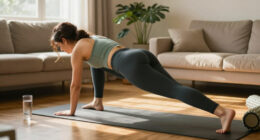
The first suggested exercise is a one-minute plank hold. Start on hands and knees with wrists beneath the shoulders, then extend the legs so the body forms a straight line from head to heels. Brace the core, squeeze the glutes, keep the neck neutral and breathe steadily. Rolnick’s modification is to remain on the knees and build toward the one-minute hold before trying a full plank.
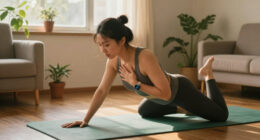
For knee push-ups, the guide suggests three sets of three to five repetitions. Place the hands slightly wider than shoulder-width, with the body aligned from head to knees; lower the chest toward a yoga block or rolled towel, pause for two to three seconds, then push back up with the elbows close to the body. If pushing up is not yet manageable, Rolnick advises practicing the lowering phase slowly. The third move, prone swimmers, is prescribed for three sets of five repetitions: lying face down, lift the arms and sweep them from the sides to overhead and back without resting them on the floor. Beginners can instead do five to 10 lifts at each of three arm positions.
A Low-Cost Starting Point at Home
The recommendations give beginners a structured starting point without equipment, with repetition targets and ways to scale the movements. That may make it easier for readers to try strength exercises at home before deciding whether they want additional equipment or coaching.
The guide is a short exercise recommendation, not a personalized training program. It does not establish how often to repeat the routine, how to progress over time, or what results a person should expect. Readers should treat the targets as suggested starting points, rather than requirements to push through pain or poor form.
Products Worth Considering

Hyperice Hypervolt Go 3 Portable Percussion Massage Gun with Carry Case

Bowflex SelectTech 840 Adjustable Kettlebell

Therabody SleepMask Blackout Eye Mask with Vibration
As an affiliate, we earn on qualifying purchases.
Three Moves, Three Difficulty Options
The report’s approach centers on weight-bearing movements rather than external resistance. Its three choices combine a static hold, a modified pressing movement and a controlled arm sweep performed on the floor. The listed instructions emphasize body position and control, while the modifications offer ways to reduce the challenge.
For the plank, the knees-down version reduces the demand compared with holding the body on hands and toes. The knee push-up also shortens the body lever, and the report suggests using a target for the chest and practicing the lowering portion if pressing back up is difficult. For prone swimmers, dividing the sweep into separate arm positions provides a simpler alternative to completing the full movement.
“For beginners, the biggest bang-for-your-buck upper-body exercises are going to involve mostly weight-bearing moves.”
— Nicholas Rolnick, physical therapist and strength and conditioning specialist
Limits of the Suggested Routine
The supplied report does not specify a weekly schedule, rest periods between sets, or a progression plan beyond building toward the full plank and breaking prone swimmers into positions. It also does not provide comparative evidence showing how these exercises perform against other beginner routines.
People’s abilities, injuries and health circumstances vary. The guide does not say whether the movements are appropriate for a specific reader, nor does it offer individualized form assessment. Anyone with a pre-existing condition, injury or uncertainty about exercise should seek guidance from a qualified health professional. Stop if an exercise causes pain, and prioritize controlled movement over completing the listed repetitions.
Progress Gradually and Check Form
The report sets out starting variations rather than a fixed progression calendar. A beginner can begin with the easier version of each movement, use controlled repetitions and attempt the harder version only when able to maintain the described position. For a plank, that means developing the knees-down hold before a full hold; for push-ups, it can mean first practicing a slow lowering phase.
No follow-up schedule or additional milestone is given in the source. Readers seeking a plan beyond these three exercises would need further instruction, including advice on frequency and how to increase difficulty safely.
Key Questions
Can I start building upper-body strength without equipment?
Yes, the Fit&Well guide recommends bodyweight moves as a starting point, including planks, knee push-ups and prone swimmers. It does not claim these exercises are a complete or individualized program.
How many knee push-ups does the guide suggest?
It recommends three sets of three to five repetitions, lowering the chest toward a target and pausing for two to three seconds before pressing up. If that is too difficult, the guide suggests practicing the lowering phase slowly.
What if I cannot hold a full plank?
Rolnick suggests staying on the knees and building toward a one-minute hold before trying the full version. Keep the movement controlled and stop if it causes pain.
How can I make prone swimmers easier?
The guide suggests doing five to 10 arm lifts in each position—arms by the sides, out in line with the shoulders, and then overhead—instead of completing the full sweep.
Does the guide say how often to do these exercises?
No. The supplied report lists sets, repetitions and a plank duration, but it does not specify a weekly schedule or rest periods.
Source: fitandwell.com