
TL;DR
Fit&Well’s report highlights muscular power, the ability to produce force quickly, as a fitness skill that may decline with age and inactivity. Trainer Kylie Hansen recommends brief, controlled sets of adaptable exercises, while noting that quality and rest matter more than exhaustion.
A Fit&Well report featuring NASM-certified personal trainer Kylie Hansen highlights muscular power—the ability to produce force quickly—as a fitness skill women may want to train in midlife, alongside strength. Hansen says power can help with rapid movements such as recovering balance after a trip, and offers a four-exercise routine built around short sets, rest and modifications rather than training to exhaustion.

Get wellness gear delivered free with Prime
- Fast, free delivery on millions of items
- Prime Video, Amazon Music and more included
- Member-only deals all year
Hansen, a coach at Busy Bariatrics, defines power as using strength at speed. She says the muscle fibers involved in quick, forceful movements can decline with age and inactivity. The report presents this as a reason to give power more attention, not as evidence that a particular routine prevents injury or extends lifespan.
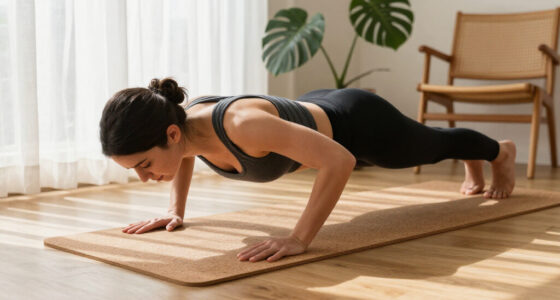
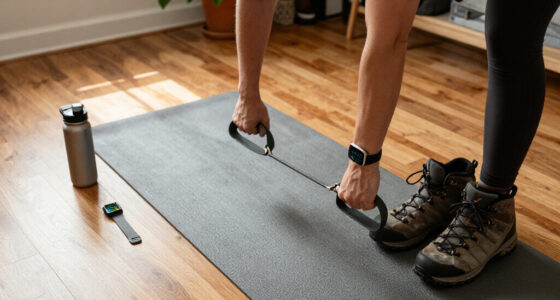
The suggested workout includes burpees, squat jumps and squats to upright rows, followed by plank dumbbell pull-throughs. The first three movements focus on producing force quickly; the plank exercise instead challenges the participant to create stability while shifting weight between arms. Hansen suggests two or three sets of five to six repetitions per exercise, with 60 to 90 seconds of rest between sets. For pull-throughs, the prescription is five to six repetitions per side.
The movements can be adjusted: a burpee can be performed by stepping rather than jumping, a squat jump can become a rise onto the toes, and the plank pull-through can be done from the knees. Hansen advises prioritizing crisp, controlled repetitions over high-repetition work that causes fatigue. The report does not provide a clinical study or comparative evidence showing that this specific sequence improves longevity.
Power Supports Quick, Everyday Movement
Power is relevant to ordinary movements that require a fast response, not just sports performance. Hansen points to catching oneself after a trip or moving quickly to regain balance. Those examples help explain why training speed of force production may complement conventional strength work, which focuses on producing force but does not necessarily require doing so quickly.
The distinction matters for readers choosing age-related exercise goals: strength and power are related, but not identical. The report’s practical contribution is to show ways to modify familiar exercises and practice faster effort without making every movement a jump. Its longevity framing should be treated cautiously, however: the supplied material does not establish that these exercises increase lifespan or prevent falls.
Products Worth Considering

Garmin Venu 4 GPS Fitness Smartwatch, 45 mm, Black Silicone Band

BowFlex Results Series SelectTech Adjustable Dumbbells (Pair)

BowFlex SelectTech 840 Adjustable Kettlebell
As an affiliate, we earn on qualifying purchases.
Strength Training Is Not the Whole Picture
The Fit&Well report says expert advice and evidence already support strength training as people age, particularly women in midlife. It argues that power receives less attention in that discussion. The article’s focus is therefore a complementary training quality, rather than a claim that strength work should be replaced.
Hansen’s recommendations are presented as general workout guidance. The report does not state that the routine was tested in a trial, nor does it specify how often to perform it or how quickly to progress. Its central instruction is to use modifications appropriate to the person and keep each repetition deliberate.
“Power drops as fatigue builds.”
— Kylie Hansen
Evidence and Individual Suitability
The source material does not identify a study behind the claim that power training is crucial for longevity, and it provides no outcome data for the four-move workout. It also does not quantify how much power typically changes in midlife, or whether the changes vary among women. The suggested benefits should be understood as Hansen’s explanation of why rapid force production can matter in daily movement, not as a guaranteed health outcome.
The report does not give screening advice or individualized progressions for people with injuries, balance problems or medical conditions. Jumping and loaded movements may not suit everyone. Readers should choose low-impact modifications and seek guidance from a qualified exercise professional or healthcare provider when personal health concerns affect exercise choices.
How to Apply the Workout Safely
The source outlines no future study, follow-up or scheduled update. Its immediate recommendation is to begin with modifications that feel manageable, use controlled form and rest 60 to 90 seconds between sets. Readers attempting the exercises can stop or adjust a movement if it causes pain, and should avoid adding speed or jumps before they can perform the underlying movement with control.
For a personalized plan—particularly for people with existing health conditions, injuries or concerns about balance—consult a healthcare professional or qualified trainer. The report does not specify a weekly schedule, a progression plan or a target intensity for beginners, so those details remain individual rather than established by this source.
Key Questions
What does muscular power mean?
Muscular power is the ability to produce force quickly. Hansen describes it as using strength at speed, such as when moving rapidly to recover balance.
How is power different from strength?
Strength is the ability to produce force; power involves producing force quickly. The Fit&Well report presents power training as a complement to strength training, not a substitute for it.
What exercises does the report recommend?
The four movements are burpees, squat jumps, squats to upright rows and plank dumbbell pull-throughs. The report includes lower-impact versions, such as stepping through a burpee or doing pull-throughs from the knees.
How many sets and repetitions are suggested?
Hansen suggests two or three sets of five to six repetitions, with 60 to 90 seconds of rest between sets. The pull-through is listed as five to six repetitions per side. She emphasizes good-quality repetitions over exhaustion.
Does this workout have proven longevity benefits?
The supplied report does not provide trial results showing that this workout extends life or prevents falls. It explains why power may be useful for everyday quick movements, but a longevity benefit is not established in the source material.
Source: rss