Flexible silicone masks generally fit better because they mold closely to your face’s contours, providing a snug, comfortable seal that reduces gaps and leaks. Rigid masks maintain shape but may not adapt as well, especially if your face shape doesn’t align perfectly. The right fit impacts safety, comfort, and effectiveness, making flexible options ideal for daily comfort and secure protection. To find out more about which mask suits your needs best, keep exploring the details below.
Key Takeaways
- Flexible silicone masks conform closely to facial contours, providing a more personalized and secure fit than rigid masks.
- Rigid masks offer consistent fit with less variability but may cause discomfort if not precisely matched to face shape.
- Silicone masks adapt better to facial movements, improving comfort during extended wear and reducing leakage.
- Rigid masks are easier to clean and maintain, but less adaptable to individual face differences.
- Proper fit impacts safety, seal integrity, comfort, and user compliance, making material flexibility crucial for optimal fit.
As an affiliate, we earn on qualifying purchases.
Why Mask Fit Affects Comfort and Safety

A proper mask fit is essential because it directly impacts both your comfort and safety. When your mask fits well, it allows for better fit customization, ensuring it contours to your face without gaps or pressure points. This can also help prevent mask slippage during movement or speech. This improves comfort considerations, making it easier to wear the mask for extended periods without discomfort or irritation. A snug but not overly tight fit helps prevent leaks, which can compromise safety by allowing unfiltered air to escape or enter. Conversely, a poor fit can cause irritation, headaches, or even reduce the mask’s effectiveness. Ensuring the right fit means balancing comfort and protection, so you stay comfortable while maintaining ideal safety standards. Proper fit customization is key to achieving this balance. Additionally, understanding environmental impact of tissue paper can encourage more sustainable choices in everyday crafting and mask accessories. For example, selecting sustainable materials for mask modifications can further reduce environmental footprints. Recognizing the importance of mask fit testing can help users ensure their masks provide optimal protection and comfort.
What Factors Influence How Well a Mask Fits (Face Shape, Size, Material)
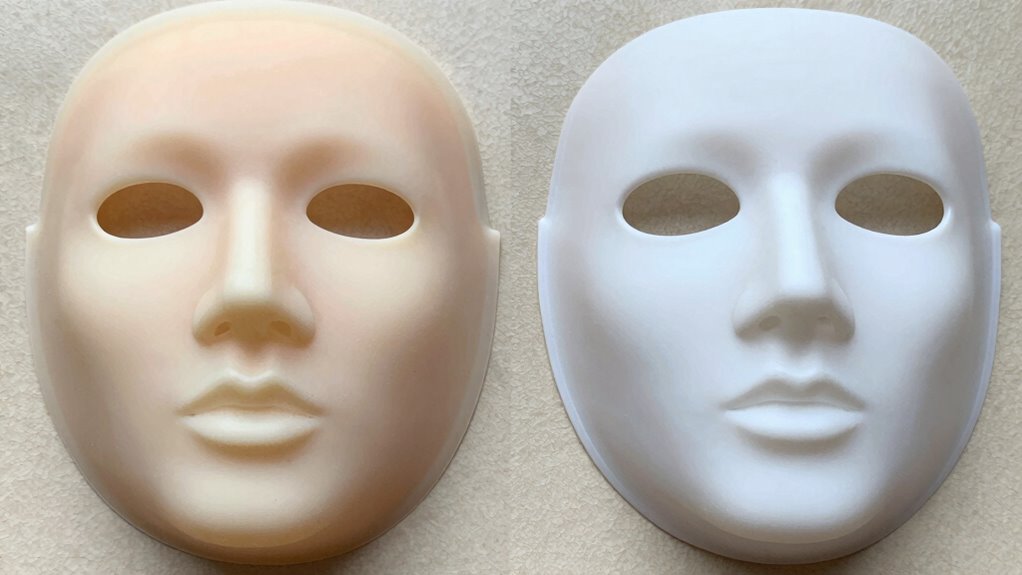
The way a mask fits depends heavily on your face shape, size, and the material of the mask itself. Your facial contours determine where pressure points or gaps form, affecting comfort and safety. Accurate sizing guarantees the mask seals properly, preventing leaks and maximizing protection. Material flexibility also plays a role; rigid masks may fit less precisely, while flexible ones adapt better to facial contours. Consider this table to see how different factors influence fit:
| Face Shape | Mask Size | Material Type |
|---|---|---|
| Oval | Proper fit | Silicone |
| Round | Slightly bigger | Rigid plastic |
| Square | Adjustable | Flexible silicone |
| Heart-shaped | Snug fit | Soft silicone |
| Long face | Larger size | Rigid or flexible |
Matching these factors guarantees a comfortable, secure fit that works for you. Additionally, understanding the material properties can help you choose a mask that maintains its fit over time and during use. Proper fit is essential to prevent discomfort caused by pressure points or gaps, which can compromise safety and comfort during extended wear. Recognizing fit consistency ensures that the mask performs reliably throughout its lifespan, providing ongoing protection. Moreover, considering material durability can influence the long-term effectiveness of the mask, especially with frequent use.
What You Should Know About Flexible Silicone Masks
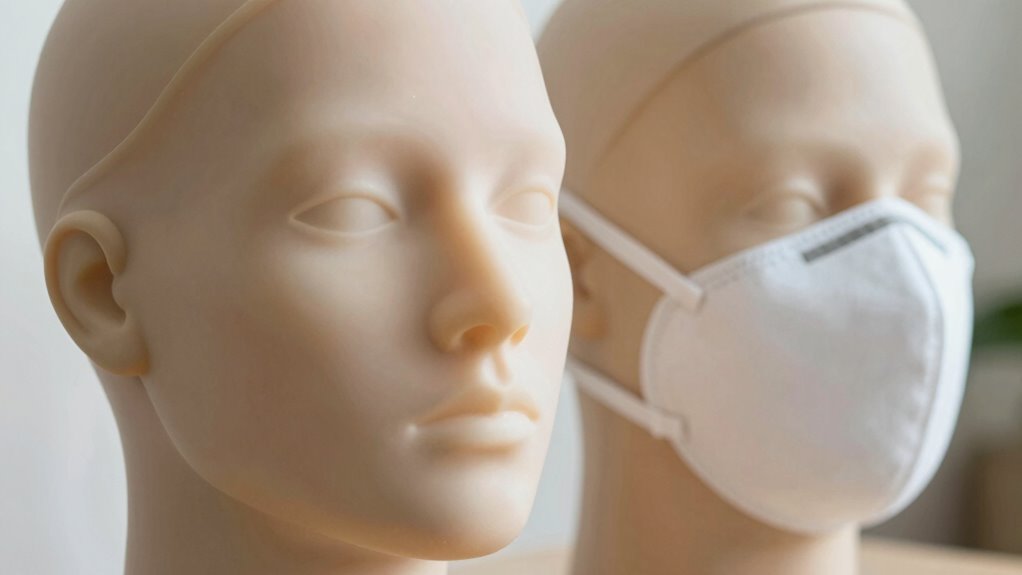
Flexible silicone masks are known for their comfort and adaptability, making them easier to wear for longer periods. They provide a snug seal and precise fit when you choose the right size and shape. Keep in mind, they require proper maintenance to stay durable and effective over time. Additionally, understanding essential safety tips for portable oil radiators can help ensure safe usage of various safety equipment and accessories. Just as abstract art challenges traditional perceptions, choosing the right mask requires rethinking comfort and functionality in new ways. Recognizing the benefits of Free Floating designs can further enhance the mask’s ability to conform to individual facial contours, improving overall performance. Incorporating ergonomic design principles can also optimize comfort and reduce fatigue during extended wear. Being aware of DIY safety tools can help users maintain their masks and accessories properly, ensuring long-term safety and effectiveness.
Material Comfort and Flexibility
Since comfort and flexibility are essential when choosing a mask, flexible silicone options stand out because they conform closely to your face and move with your expressions. The mask material’s pliability ensures a comfortable fit, reducing pressure points and irritation. This adaptability makes flexible silicone ideal for various face shapes, providing a snug yet comfortable seal without feeling restrictive. Unlike rigid masks, which can feel bulky or rigid, flexible silicone molds naturally to your contours, enhancing wearability for extended periods. Its elasticity allows for easy adjustments, so you don’t have to compromise comfort for fit. Additionally, flexible silicone can help minimize pressure points, leading to a more comfortable experience during prolonged wear. Its material’s durability ensures the mask maintains its flexibility even after repeated use, making it a reliable choice for long-term comfort. Moreover, flexible silicone’s hypoallergenic nature reduces the risk of skin irritation, further increasing comfort for sensitive users. Furthermore, flexible silicone masks are often more aesthetic, allowing for creative designs that can complement various decor styles. Incorporating flexible silicone can also contribute to better material longevity, ensuring the mask remains functional and comfortable over time.
Seal and Fit Precision
Flexible silicone masks are designed to provide a precise seal by closely conforming to your facial contours. This close fit ensures minimal gaps, improving overall protection and comfort. With adjustability options like flexible straps and customizable edges, you can fine-tune the mask for your face shape. The material’s breathability allows air circulation, reducing moisture buildup and skin irritation. Visualize:
- The mask gently molding around your nose and cheeks.
- Straps that adapt to your jawline for a snug fit.
- Edges that seal seamlessly along your face.
- Airflow channels that keep you comfortable during extended wear.
- Seal and fit precision are essential factors that influence both safety and comfort in mask selection. Additionally, the material flexibility helps accommodate facial movements, enhancing comfort during prolonged use. Proper fit adjustment is crucial for maintaining a secure seal and preventing leaks, especially during extended wear or physical activity. When the mask fits well, it also contributes to better user confidence and compliance, ensuring effective protection. Achieving an optimal fit also depends on understanding facial contours to select the best mask type for your face shape. All these features contribute to superior seal integrity and fit precision, making flexible silicone masks a reliable choice for those seeking comfort without sacrificing security.
Maintenance and Durability
Maintaining your silicone mask is straightforward, and with proper care, it can last for a long time. Regular mask cleaning with gentle soap and water keeps it hygienic and prevents deterioration. Store it in a cool, dry place, away from direct sunlight, to preserve flexibility and shape. Using appropriate storage solutions, like a soft pouch or a dedicated container, helps prevent deformation and damage. Silicone masks are durable but can degrade if neglected. Here’s a quick comparison:
| Aspect | Tip |
|---|---|
| Cleaning | Use mild soap and rinse thoroughly |
| Storage solutions | Keep in a cool, dry place, avoid sunlight |
| Flexibility maintenance | Avoid sharp objects or excessive stretching |
| Durability factors | Regular cleaning and proper storage extend life |
| Damage prevention | Handle gently, avoid harsh chemicals |
Proper maintenance guarantees your mask stays durable and comfortable. Additionally, material maintenance ensures the longevity of silicone masks by preventing common wear and tear issues, especially since appliance maintenance plans highlight the importance of preventive care to extend product lifespan.
The Design and Features of Rigid Masks
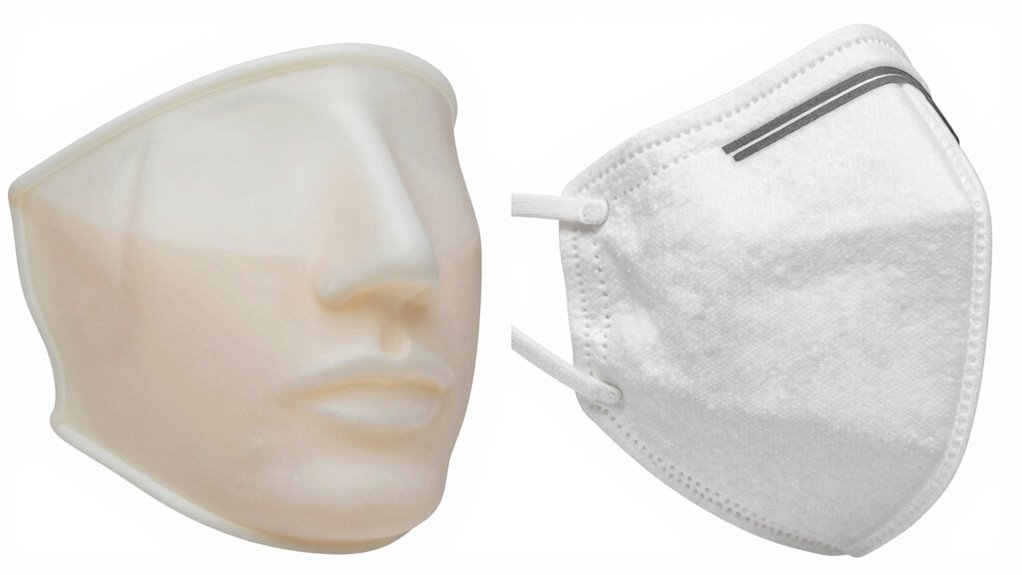
Rigid masks are designed with durable, inflexible materials that provide a secure and consistent fit. This mask design relies on sturdy components like hard plastics or rigid silicone, chosen for their strength and stability. The material selection guarantees the mask maintains its shape over time, preventing deformation even after repeated use. Imagine a mask with:
Rigid masks use durable materials like hard plastics and silicone for a secure, long-lasting fit.
- A solid, molded outer shell that contours to your face
- Precise edges that create a tight seal
- Reinforced sections for extra durability
- Minimal flexibility, emphasizing structure over adaptability
These features emphasize the importance of material choice and design in creating a mask that stays securely in place. Rigid masks focus on stability and protection, often sacrificing some comfort for a reliable fit and longevity.
How a Good Fit Enhances Mask Effectiveness and Comfort

A mask that fits well forms the foundation for both its effectiveness and your comfort. Proper mask sizing ensures a secure seal, preventing air leaks and maximizing filtration. When a mask conforms to your facial contours, it maintains consistent contact, reducing gaps where contaminants could enter. An ill-fitting mask can cause discomfort, pressure points, and frequent adjustments, which compromise its protective ability. By choosing a mask that matches your facial contours, you’ll experience a better fit, less irritation, and easier breathing. The right fit also minimizes skin irritation and enhances overall comfort for extended wear. Remember, a well-fitted mask isn’t just about protection—it’s about making sure you’re comfortable enough to wear it correctly throughout the day.
Rigid Masks or Silicone Masks: Which Fits Better for Your Needs?
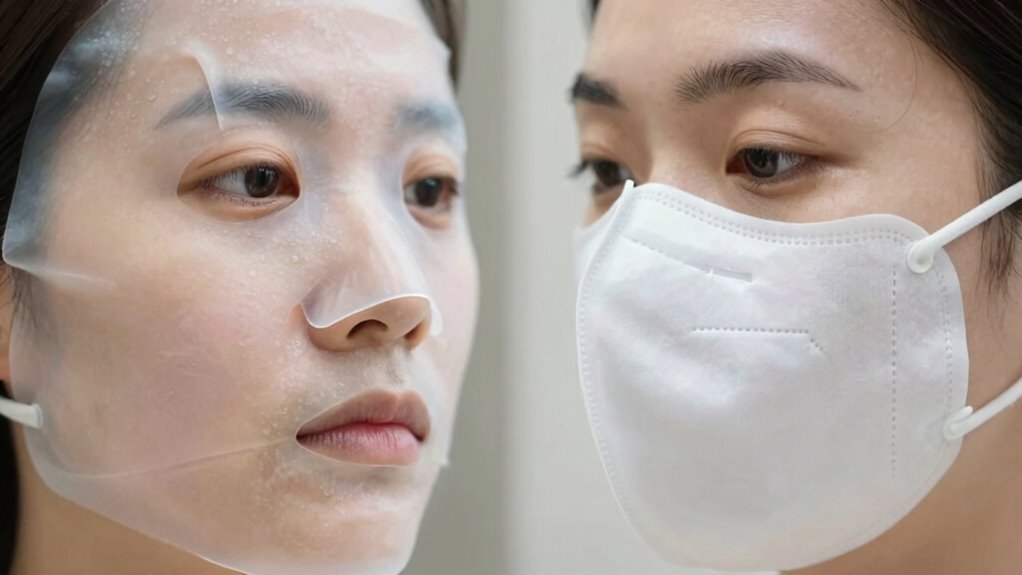
Choosing between rigid masks and silicone masks depends on what matters most to you. Rigid masks often provide a snug seal and are easier to clean, but may sacrifice comfort over extended wear. Silicone masks tend to offer better comfort and flexibility but might require more maintenance to stay durable.
Comfort Level Differences
While both silicone and rigid masks aim to provide a secure fit, silicone masks often feel more comfortable because they mold closely to your face, reducing pressure points. They conform better to your facial contours, resulting in less discomfort during extended wear. Silicone’s material breathability allows some airflow, helping prevent sweat buildup. If you have sensitive skin, silicone’s softer texture minimizes irritation compared to rigid masks, which can be harsher. Imagine these comfort features:
- Gentle contouring that reduces pinching or tight spots
- Soft, pliable material that moves with your facial expressions
- Improved airflow to keep your skin dry and fresh
- Reduced skin sensitivity thanks to silicone’s smooth surface
Ultimately, silicone offers a more adaptable, skin-friendly experience, making it easier to wear comfortably for longer periods.
Seal and Fit Quality
When it comes to seal and fit quality, rigid masks often provide a more consistent and secure fit because their stiff structure maintains shape under pressure. This stability helps prevent leaks and ensures reliable performance, especially in critical situations. Rigid masks typically have a precise seal around the edges, which can enhance latex compatibility if designed with hypoallergenic materials, making them suitable for sensitive skin. However, their aesthetic appeal might be less versatile, often appearing more utilitarian. Silicone masks, on the other hand, tend to conform better to individual face shapes, offering a more personalized fit. Ultimately, if you prioritize a tight, dependable seal, rigid masks usually excel, but comfort and contouring can favor silicone options. The choice depends on your specific requirements and preferences.
Durability and Maintenance
Rigid masks generally offer greater durability because their sturdy materials resist cracking, warping, and degradation over time. They are typically made from durable plastics or resins that withstand daily wear. When it comes to maintenance, rigid masks require specific cleaning procedures to keep them in top shape. For example:
- Gently wipe with a damp cloth to remove surface dirt.
- Use mild soap and water for deeper cleaning.
- Avoid harsh chemicals that could damage the mask material.
- Regularly inspect for cracks or warping to ensure a proper seal.
These steps help prolong the lifespan of your mask and maintain its protective qualities. While rigid masks excel in durability, they demand careful cleaning to prevent deterioration and ensure consistent performance.
Tips to Achieve the Perfect Fit With Flexible Silicone Masks
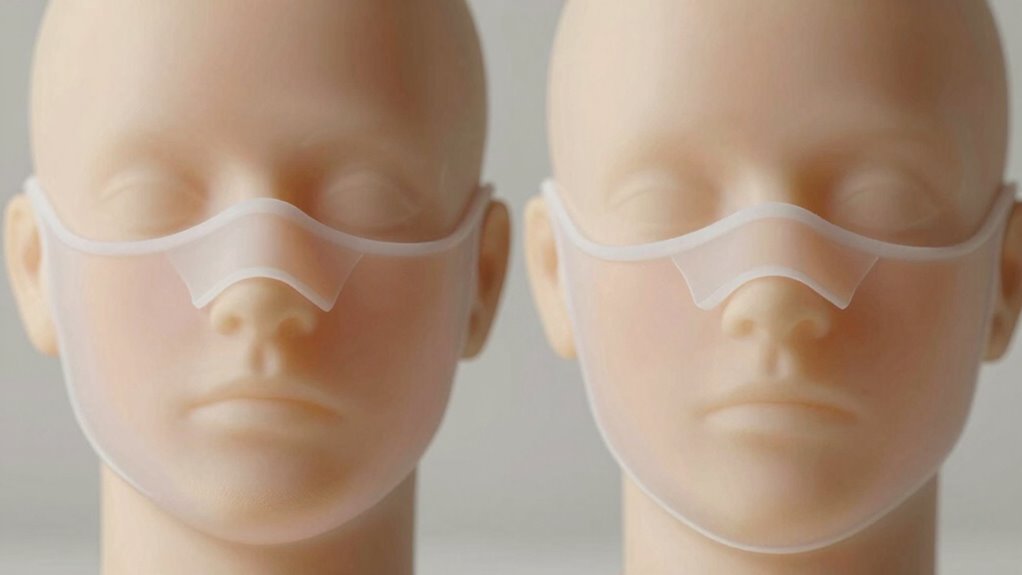
Achieving a perfect fit with flexible silicone masks starts with proper sizing and adjustment. Your mask material plays a key role, as flexible silicone adapts well to facial contours, but choosing the right size guarantees comfort and seal. To optimize fit, start by measuring your face accurately, focusing on areas like the jawline, cheekbones, and nose. When fitting the mask, gently press it against your skin, smoothing out any air pockets or gaps. Use adjustable straps to secure it snugly without causing discomfort. Regularly check for even contact around your face, as facial contours vary widely. Remember, a well-fitted flexible silicone mask not only enhances comfort but also improves performance by ensuring a secure, natural seal.
When Might Rigid Masks Offer a More Secure or Comfortable Fit?
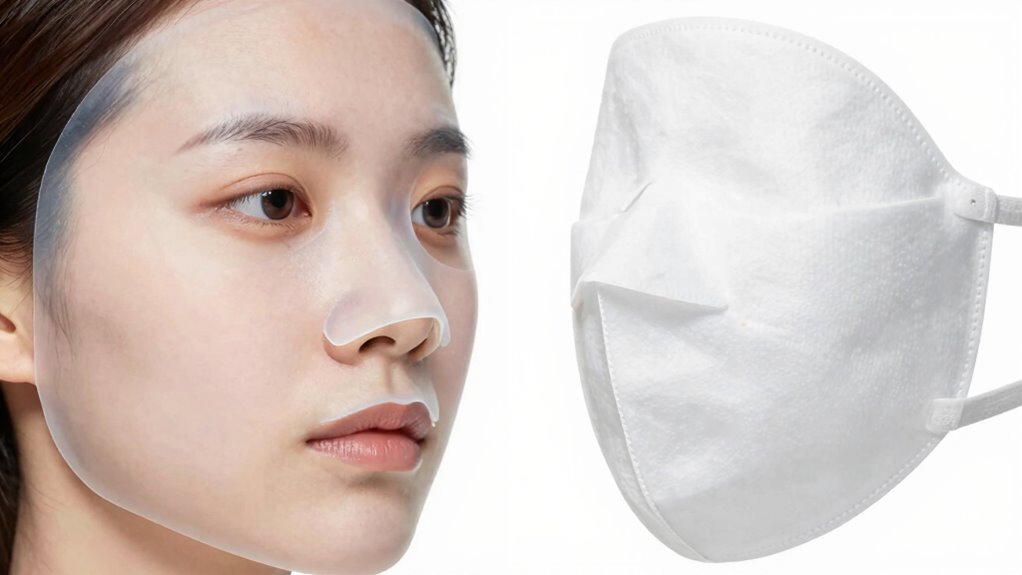
While flexible silicone masks adapt well to most facial contours, there are situations where rigid masks can provide a more secure or comfortable fit. If your face contouring requires a precise, consistent shape for aesthetic appeal, rigid masks might be better. They also excel when you need minimal movement during use, reducing slipping. Consider rigid masks if you have prominent facial features or irregular contours that flexible masks can’t mold perfectly. Imagine a mask that:
- Fits snugly around your brow and jawline, preventing gaps.
- Holds its shape during physical activity, ensuring stability.
- Highlights facial contours for a sharper aesthetic appeal.
- Provides a sense of security when movement is frequent. In such cases, the rigidity offers a more reliable, secure fit, especially when precision and stability matter most.
Choosing the Right Mask: How to Pick the Best Fit for Your Face and Purpose
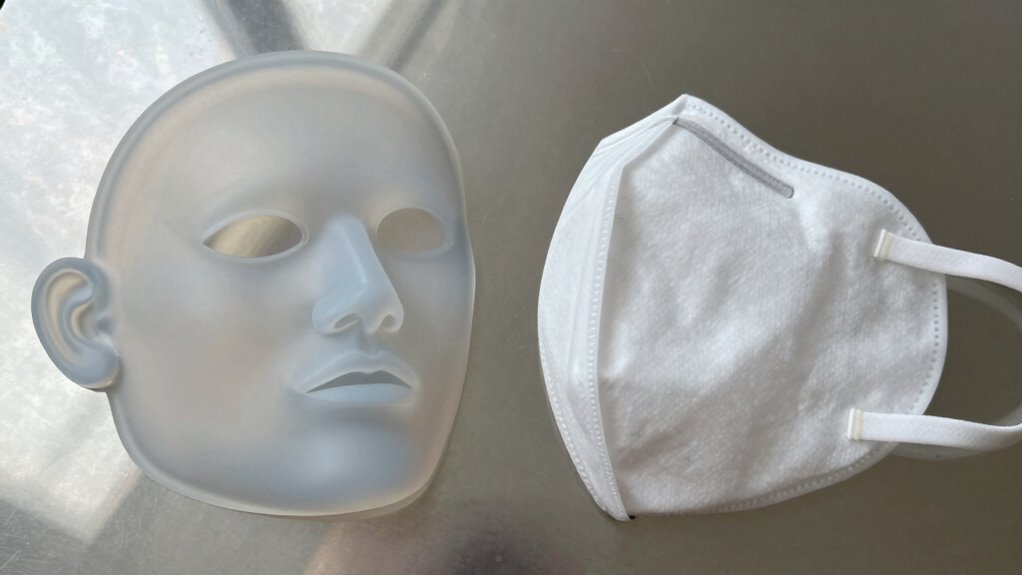
Choosing the right mask begins with understanding your face shape, skin sensitivity, and the purpose you need it for. Your face shape influences how well a mask fits and stays in place, so selecting one that complements your features guarantees comfort and effectiveness. Material flexibility plays a vital role—flexible silicone molds easily to contours, providing a snug, comfortable fit, while rigid masks may be better for secure sealing in specific applications. Consider whether you need a mask for long-term wear, safety, or medical purposes, as this affects your choice. If comfort and adaptability are priorities, opt for a mask with high material flexibility that matches your face shape. Making an informed decision guarantees better fit, comfort, and functionality for your specific needs.
Frequently Asked Questions
How Do Silicone Masks Compare in Durability to Rigid Masks?
Silicone masks generally offer better durability than rigid masks due to their superior material longevity and impact resistance. You’ll find that silicone withstands daily wear and tear, maintaining its shape and flexibility longer. Rigid masks, while sturdy, tend to crack or break more easily under impact. So, if you want a mask that lasts longer and resists damage, silicone is the smarter choice for durability.
Can Flexible Silicone Masks Be Customized for Unique Facial Features?
Yes, flexible silicone masks can be customized for your unique facial features through facial tailoring. The material’s flexibility allows artisans to mold and adjust the mask to fit precisely, ensuring comfort and realism. This customization process leverages the adaptable nature of silicone, making it possible to capture your specific contours and expressions. As a result, flexible silicone masks offer a personalized fit that rigid masks often can’t provide, enhancing both appearance and comfort.
Are Rigid Masks More Suitable for Medical or Industrial Applications?
Have you wondered if rigid masks are better suited for certain tasks? Rigid masks are more suitable for industrial and medical applications because of their durability and precise fit. They handle high-stress environments and offer consistent performance. The application differences matter, as rigid masks provide stability and safety in demanding situations. So, if you need a dependable, long-lasting mask for critical use, rigid masks are often the better choice.
How Does Mask Material Affect Long-Term Skin Comfort?
The mask material markedly impacts your long-term skin comfort by influencing skin irritation and breathability. Flexible silicone tends to be gentler, reducing irritation with its softer surface, while rigid masks might cause more pressure points and discomfort over time. Breathable materials help keep your skin dry and healthy, preventing irritation. Choosing a mask with breathable, skin-friendly material ensures you stay comfortable during extended wear, minimizing skin issues.
What Maintenance Is Required to Ensure Mask Fit Over Time?
You need to stay vigilant with your mask’s fit over time. Regularly check and perform cleaning routines to prevent buildup that can loosen or cause discomfort. Don’t forget fit adjustments—your mask might shift or weaken, so re-tighten straps or reposition it as needed. This ongoing maintenance guarantees your mask remains effective and comfortable, preventing surprises that could compromise your sleep or health. Stay proactive, and your mask will serve you well.
Conclusion
Ultimately, choosing between flexible silicone and rigid masks is like finding the perfect puzzle piece—your face is the unique shape that makes all the difference. A mask that fits well wraps around you like a second skin, ensuring safety and comfort while you breathe easy. Whether you prefer the gentle hug of silicone or the steadfast hold of rigid design, selecting the right fit transforms your mask into a trusted partner, ready to face whatever lies ahead.