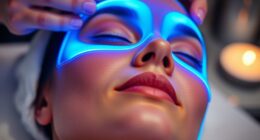
Photobiomodulation uses specific LED wavelengths, usually in red or near-infrared, to influence your cells by targeting the mitochondria—the energy centers. The light enhances mitochondrial function, boosting ATP production, which provides your cells with more energy for repair and healing. It also triggers signaling molecules like ROS and nitric oxide, reducing inflammation and promoting regeneration. As you explore further, you’ll discover how this process can improve recovery and overall tissue health.
Key Takeaways
- LED light penetrates tissues and is absorbed primarily by mitochondria, especially via cytochrome c oxidase.
- Absorption enhances mitochondrial function, increasing ATP production and cellular energy availability.
- Elevated mitochondrial activity triggers the release of signaling molecules like ROS and nitric oxide.
- These signaling molecules activate cellular pathways that promote inflammation reduction, blood flow, and tissue repair.
- Overall, LED light modulates cellular processes to accelerate healing, reduce pain, and support tissue regeneration.
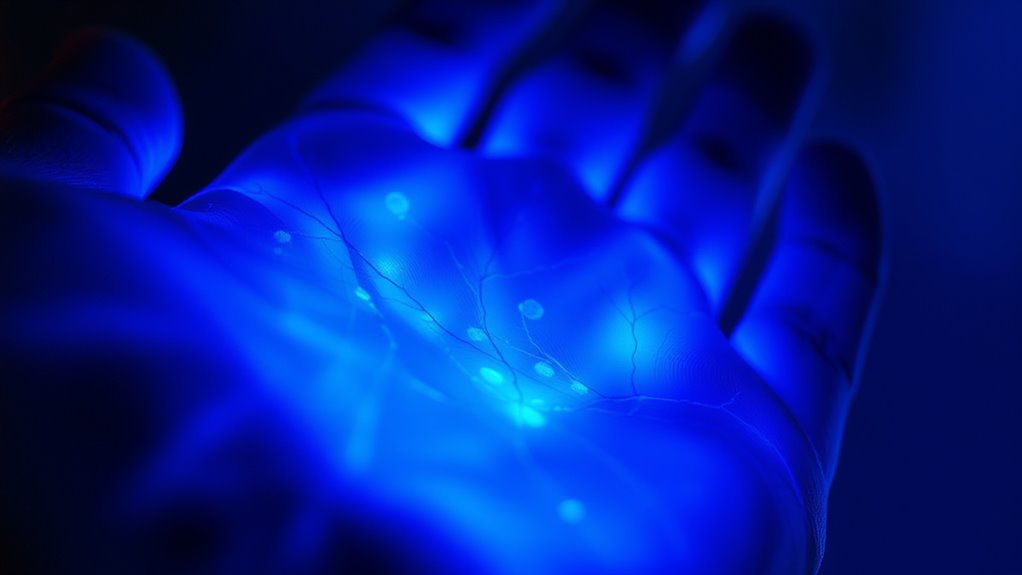
Photobiomodulation, often called light therapy, harnesses specific wavelengths of light to stimulate cellular processes and promote healing. When you’re exposed to certain LED light wavelengths, your cells respond by activating complex biological mechanisms. Central to this process are cell signaling pathways, which serve as communication channels within and between cells, guiding them to perform crucial functions. Light energy penetrates your tissues and interacts with cellular components, triggering a cascade of signals that can influence inflammation, repair, and regeneration.
One of the primary targets of photobiomodulation is the mitochondria, often called the powerhouses of the cell. These tiny organelles are responsible for producing ATP, the energy currency your cells need to function. When exposed to specific wavelengths—particularly in the red and near-infrared spectrum—mitochondria absorb the light through a molecule called cytochrome c oxidase. This absorption enhances mitochondrial function, boosting ATP production and improving overall cellular energy availability. As your cells generate more energy, they become more efficient at repairing damage, reducing oxidative stress, and supporting tissue regeneration.
This increase in mitochondrial activity also influences cell signaling pathways. Enhanced mitochondrial function leads to the release of signaling molecules like reactive oxygen species (ROS) and nitric oxide, which, in controlled amounts, act as messengers to activate various cellular responses. These responses include improved blood flow, reduced inflammation, and accelerated healing. Fundamentally, the light energy acts as a catalyst, switching on cellular repair mechanisms that might otherwise remain dormant or sluggish.
You can think of photobiomodulation as a way to “jump-start” your cells’ natural healing processes. By stimulating mitochondrial function, you’re encouraging your cells to produce more energy efficiently, which in turn amplifies cell signaling pathways that support recovery. This process is especially beneficial in tissues that are slow to heal or damaged by injury, aging, or chronic conditions. The result is a reduction in pain, swelling, and inflammation, alongside improved tissue repair.
Frequently Asked Questions
Can LED Photobiomodulation Treat Specific Medical Conditions Effectively?
Yes, LED photobiomodulation can treat specific medical conditions effectively when supported by proper clinical efficacy data and tailored treatment protocols. You should consult healthcare professionals experienced in this therapy to guarantee the protocols are appropriate for your condition. While some studies show promising results for pain, inflammation, and tissue repair, ongoing research is essential to confirm long-term effectiveness and optimize treatment strategies for individual needs.
Are There Any Long-Term Side Effects of LED Light Therapy?
Long-term safety of LED light therapy appears promising, with minimal potential risks reported so far. You’re unlikely to experience serious side effects if you follow recommended guidelines. However, it’s crucial to evaluate potential risks like skin irritation or eye strain with prolonged exposure. Always consult a healthcare professional for personalized advice, especially if you have pre-existing conditions, to guarantee safe, effective treatment and monitor long-term safety.
How Does LED Light Therapy Compare to Traditional Laser Treatments?
Sure, laser treatments might sound fancy with their precision and exclusivity, but LED light therapy offers comparable benefits at a fraction of the cost and with greater treatment accessibility. While lasers provide laser precision for targeted issues, LEDs are gentler, safer, and easier to use regularly. If you’re seeking effective skin rejuvenation or pain relief without the intimidating equipment, LED therapy might just be your more practical, friendly option.
What Are the Optimal Wavelengths and Dosages for Different Health Issues?
You should focus on specific wavelength selection and dosage optimization tailored to your health issue. For skin rejuvenation, use wavelengths around 630-670 nm; for pain relief, 810-850 nm works best. Adjust the dosage based on your treatment area and desired results, starting with lower doses and gradually increasing. Consulting a professional helps guarantee you’re using the right wavelengths and dosages for effective, safe therapy tailored to your needs.
Is LED Photobiomodulation Safe for Children and Pregnant Women?
LED photobiomodulation can be safe for children and pregnant women if used properly, but you should always prioritize pediatric safety and consider prenatal considerations. Consult healthcare professionals before use, as dosages and wavelengths matter greatly. Avoid direct eye exposure, and verify sessions are conducted under expert guidance to minimize risks. With caution and proper protocols, you can potentially benefit from LED therapy while safeguarding health during sensitive periods.
Conclusion
You might be surprised to learn that over 80% of users report improved skin health and reduced inflammation after just a few weeks of LED light therapy. As you’ve seen, photobiomodulation harnesses the power of light to alter cellular function, promoting healing and energy. This innovative approach is transforming wellness routines worldwide. So, next time you see an LED device, remember—you’re tapping into a science that’s changing lives, one cell at a time.