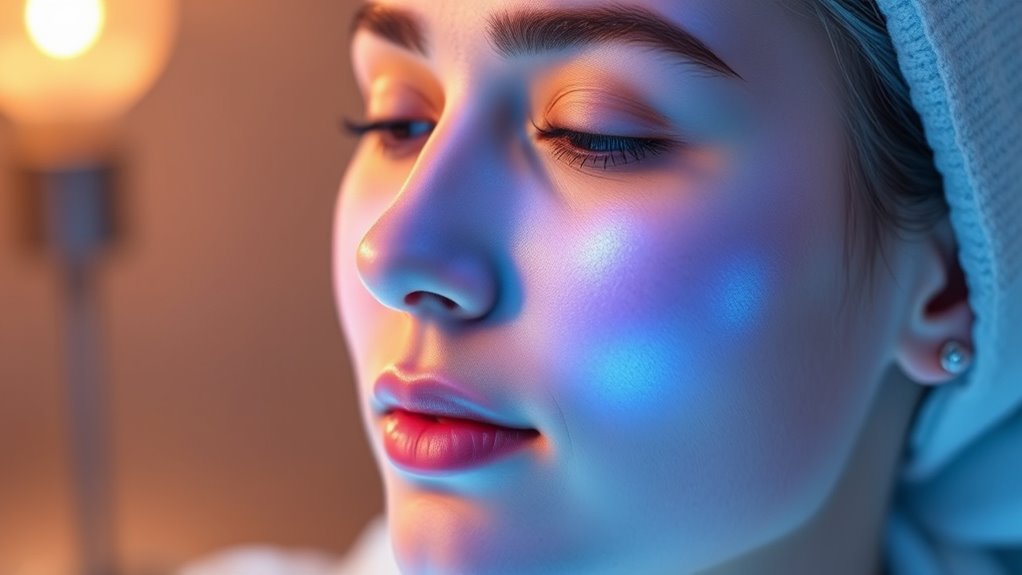

Yes, light therapy can help reduce hyperpigmentation by using specific wavelengths of light to target and break down excess melanin in your skin. It stimulates cellular activity, gradually fading dark spots and promoting healthier skin growth. This treatment is precise, with minimal discomfort and downtime, making it suitable for many skin types. To understand how it could work for you and explore potential benefits, keep going for more detailed information.
Key Takeaways
- Light therapy uses specific wavelengths to target and break down excess melanin in hyperpigmented areas.
- Treatments are quick, minimally invasive, and generally well-tolerated, with mild sensations like tingling.
- Visible improvements often occur after several sessions with consistent treatment.
- It promotes skin regeneration, improving overall tone and texture alongside reducing dark spots.
- Post-treatment sun protection is essential to maintain results and prevent new hyperpigmentation.
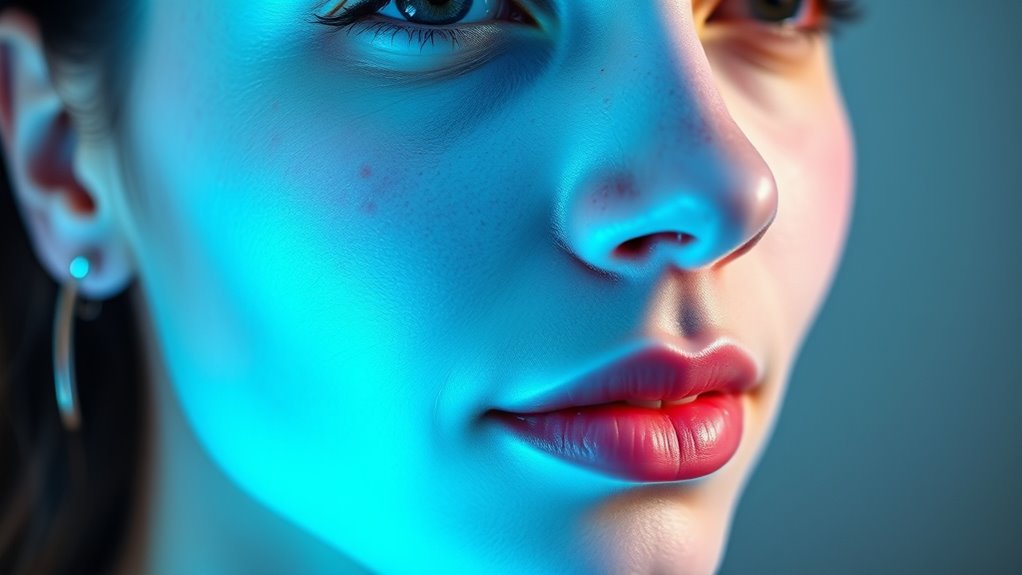
Have you wondered how light therapy can help reduce hyperpigmentation? If you’ve been battling dark spots, uneven skin tone, or age spots, you’re probably exploring various treatments to find the most effective solution. Light therapy, also known as phototherapy, has gained popularity as a non-invasive option that targets pigmentation issues at their root. It works by using specific wavelengths of light to penetrate the skin, stimulating cellular activity and encouraging the breakdown of excess melanin—the pigment responsible for dark spots. This process can gradually fade hyperpigmented areas, revealing a more even complexion.
Light therapy targets pigmentation deep within the skin, gradually fading dark spots for a more even complexion.
When you undergo light therapy for hyperpigmentation, a trained professional will typically use a device that emits either intense pulsed light (IPL) or specific lasers. These tools are designed to target melanin precisely without damaging surrounding tissues. During treatment, you might feel a mild sensation, like a snapping or tingling, but most sessions are quick and comfortable. The number of treatments you’ll need depends on the severity of your hyperpigmentation and your skin’s response, but many people notice visible improvements after just a few sessions. Consistency is key, as multiple treatments help to gradually break down excess pigment and encourage new, healthier skin growth.
One of the primary advantages of light therapy is its precision. Unlike topical creams that can sometimes irritate the skin or take months to show results, light therapy targets specific problem areas with minimal downtime. You can typically resume your daily activities shortly after a session, making it a convenient option for busy schedules. Additionally, light therapy can improve overall skin texture and tone, not just reduce dark spots, by stimulating collagen production. This added benefit can make your skin look fresher, plumper, and more youthful.
However, it’s essential to understand that light therapy isn’t a guaranteed cure for hyperpigmentation. Results can vary based on skin type, the depth of pigmentation, and adherence to post-treatment care. Protecting your skin from sun exposure after sessions is vital because UV rays can worsen hyperpigmentation or cause new spots to develop. You should also follow your dermatologist’s advice on skincare routines, including the use of broad-spectrum sunscreens and moisturizing products to support healing.
Frequently Asked Questions
Are There Any Side Effects From Light Therapy?
Yes, light therapy can cause side effects, but they’re usually mild and temporary. You might experience redness, swelling, or irritation at the treatment site. Some people notice dryness or changes in skin color. Rarely, more serious issues like blistering or pigmentation changes occur. To minimize risks, follow your provider’s instructions carefully, and report any adverse reactions promptly. Most side effects resolve quickly with proper care.
How Long Does a Typical Light Therapy Session Last?
A typical light therapy session lasts about 15 to 30 minutes. You’ll sit comfortably as the device delivers controlled pulses of light to your skin. The duration may vary based on your specific treatment plan and skin condition. During the session, you might feel a warm sensation, but it shouldn’t be uncomfortable. Your provider will tailor the length of each session to guarantee safety and effectiveness.
Can Light Therapy Be Combined With Other Treatments?
Yes, you can combine light therapy with other treatments for hyperpigmentation. Many people find that using light therapy alongside topical creams, chemical peels, or laser treatments boosts results. Always consult your dermatologist to develop a personalized plan, as combining treatments can increase effectiveness and reduce downtime. Following their advice ensures safe, coordinated care that targets pigmentation more effectively and minimizes potential side effects.
Is Light Therapy Suitable for All Skin Types?
Light therapy can be suitable for many skin types, but it depends on your individual skin tone and concerns. You might find it effective if you have mild to moderate hyperpigmentation, but those with darker skin tones should consult a dermatologist first, as they may be more prone to pigmentation changes. Always get personalized advice to guarantee the treatment is safe and appropriate for your specific skin type.
How Soon Can Results Be Expected After Treatment?
You can typically see results within a few sessions, usually after 2 to 4 treatments. However, the exact timeline depends on your skin type, the severity of hyperpigmentation, and the specific light therapy used. Some individuals notice improvements sooner, while others may need more sessions. Consistent treatment and proper skin care are key to achieving the best results, so follow your practitioner’s advice closely.
Conclusion
If you’re worried light therapy might be too harsh or ineffective, think again—many find it safe and beneficial for reducing hyperpigmentation. While results can vary, consistent treatments often lead to noticeable improvements without the downtime of more invasive procedures. Don’t let doubts hold you back; with proper guidance, light therapy could be a gentle, effective solution to brighten your skin and boost your confidence. Give it a try—you might be surprised by the results.