TL;DR

Get wellness gear delivered free with Prime
- Fast, free delivery on millions of items
- Prime Video, Amazon Music and more included
- Member-only deals all year
Light therapy lamps provide bright, usually UV-filtered light and have their clearest evidence as an option for winter-pattern seasonal affective disorder (SAD). A common protocol uses a 10,000-lux device for about 20–30 minutes in the morning at its specified distance, but the right schedule depends on the device and your health. Check safety with a clinician if you have bipolar disorder, significant eye disease, or take medication that increases light sensitivity.
A lamp can say 10,000 lux on the box and still be the wrong choice if you sit too far away or use it at the wrong time. That’s because light therapy depends on more than brightness: distance, timing, duration, and your health all shape how the light may affect you.
Light therapy lamps, also called bright-light therapy boxes, are best known as an option for winter-pattern seasonal affective disorder (SAD). They are not a cure-all for low mood, tiredness, or poor sleep, and a bright lamp is not automatically a therapy device.
This guide explains what these lamps do, what the evidence supports, how to compare products, and when to get professional advice. You’ll leave with practical checks you can use before bringing a light box to your breakfast table.
The strongest established use for bright-light therapy is as an option for winter-pattern SAD; evidence differs for other conditions.
Check the lamp’s lux rating at its stated distance, its UV filtering, and the instructions for the intended use.
A common SAD protocol uses about 20–30 minutes in the morning with a 10,000-lux device, but this is not a universal schedule.
Do not stare into the lamp; position it as directed so light reaches your eyes indirectly.
Ask a clinician first if you have bipolar disorder, significant eye disease, or use medication that increases light sensitivity.
What light therapy lamps do for your body clock
Light therapy lamps for wellness provide bright light that can influence your body clock, which helps regulate sleep timing and daily alertness. Your eyes receive light information and pass signals that help your body distinguish daytime from night. The lamp is more like a timing cue than a battery charger: it can support a rhythm, but it does not simply add energy on demand.
The timing metaphor matters because light can shift your body clock, not just make you feel more awake in the moment. Depending on when you receive it, bright light may move your rhythm earlier or later. That can be helpful when the shift matches your goal, but counterproductive when it pushes sleep and wake times in the wrong direction. This is why the same lamp can be useful in one routine and disruptive in another.
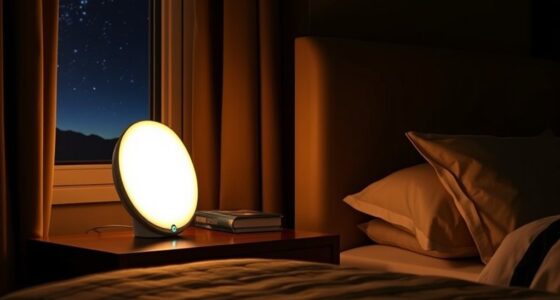
For example, imagine you sit near a UV-filtered light box while eating breakfast on a dim winter morning. The light reaches your eyes indirectly while you read or sip tea; you do not stare into the panel. The brightness and timing may matter more than the lamp’s color, shape, or attractive wood stand. A setup you can use consistently at the specified distance is more useful than a powerful device that is uncomfortable or impractical to place.
Light therapy boxes are designed to provide bright light while filtering out ultraviolet radiation. That distinction matters: tanning lamps and ordinary UV lamps are not substitutes. A UV-filtered therapy box also does not provide vitamin D, so don’t buy one for that purpose or seek UV exposure as a workaround. UV exposure introduces risks that are separate from the intended effects of bright visible light.
Light’s effects depend on brightness, timing, duration, and individual biology. Morning light is common in protocols for winter-pattern SAD, while bright light late in the day can shift your body clock in an unwanted direction. Your neighbor’s helpful schedule may not suit your sleep pattern. In practice, following the device’s distance and timing instructions is part of using the therapy—not a minor technical detail.
Think of light like an alarm clock for your body rhythm: the cue can help set timing, but the right time to ring it depends on the schedule you want.
Products Worth Considering

Garmin Forerunner 265S 42 mm GPS Running Watch, Light Pink and Powder Gray

BowFlex Results Series SelectTech Adjustable Dumbbells, Pair

Bowflex SelectTech 840 Adjustable Kettlebell
As an affiliate, we earn on qualifying purchases.
Where the evidence is strongest—and where it is still developing
Light therapy lamps for wellness have their clearest established use as an option for winter-pattern SAD. Clinical guidance and research support bright-light therapy for this condition, while evidence and recommendations for other uses vary. That means a product advertised for mood, sleep, focus, and energy should not be treated as proven for every one of those goals. Evidence is condition-specific: a result for winter-pattern SAD does not establish that the same device or schedule treats fatigue, insomnia, or low mood from another cause.
Research continues to examine bright light for nonseasonal depression, bipolar depression, sleep and circadian problems, and other conditions. Some findings are promising, but they do not make every consumer lamp a tested treatment. A compact wearable device or adjustable-color panel may be convenient; convenience alone does not show that it works for a particular condition. Differences in intensity, timing, and how a device delivers light can make results from one study difficult to apply to another product.
Picture two people buying similar lamps in October. One has a clinician-supported plan for winter-pattern SAD; the other hopes a desk lamp will fix persistent fatigue. The first has a specific reason to discuss light therapy. The second needs to look beyond a marketing label, since chronic fatigue can have many causes and a lamp is not a general-purpose remedy. If the fatigue has an underlying medical or sleep-related cause, relying on a lamp alone could delay finding and addressing it.
When a brand makes broad claims, ask what condition the device was studied for and whether the research matches the product’s brightness, distance, timing, and intended use. “Wellness” is a wide label, not a clinical result. For depression, severe symptoms, or persistent sleep problems, a lamp should not replace a professional assessment or another recommended treatment. The tradeoff is straightforward: a lamp may be a relatively accessible part of a plan, but using it without clarifying the problem can create false reassurance or lead to a poorly timed routine.
The practical boundary is simple: evidence for one condition does not automatically prove a benefit for another. Use a lamp as part of a care plan when appropriate, not as a reason to delay care or stop prescribed treatment on your own.
How to choose a lamp without getting fooled by the label
Choose a lamp by its specifications and intended use, not by the biggest number on the package. A 10,000-lux rating is meaningful only alongside the distance where the maker measured it, the exposure time, and the device’s instructions. Lux drops substantially as you move farther away, so a lamp that reaches its rating at a short distance may be awkward to use at your desk. The practical consequence is that a high headline number may describe a setup you cannot comfortably reproduce.
- Check lux and distance. Look for the stated brightness at a clearly specified distance, not just “up to 10,000 lux.” Compare that distance with the space where you plan to use the lamp; a lower-intensity setup that fits your routine may be easier to follow than a more powerful device that requires an uncomfortable position.
- Confirm UV filtering. Choose a device designed to filter ultraviolet radiation; avoid tanning or UV lamps. Brightness is not a reason to accept UV exposure, because UV is not the therapeutic feature these devices are intended to provide.
- Check the intended use and evidence. Look for support for the particular condition the seller claims to address. A device’s marketing category does not tell you whether it has been studied for that use.
- Test the setup in your actual space. Can you sit at the recommended distance while eating or reading without staring at the panel? If glare or placement makes the session unpleasant, consistency may suffer even if the specifications look good.
- Read the instructions, warranty, and return policy. These details matter if the size, glare, or routine does not fit your day. A clear return policy can reduce the risk of being stuck with a device that is technically suitable but impractical for you.
For instance, a small lamp may fit neatly beside your laptop but require you to sit unusually close to reach its stated brightness. A larger panel might take up more counter space yet let you keep a comfortable position. The best fit is the device whose specifications and placement you can follow consistently. That consistency matters because a theoretically ideal lamp is of little use if its setup is difficult to maintain.
Product names can muddy the water: “SAD lamp,” “sun lamp,” and “light therapy” are used inconsistently in marketing. Rather than trusting the name, compare the UV information, lux-at-distance rating, instructions, and evidence for the advertised use. Extra settings and sleek styling can be nice, but they do not replace those basics. Paying for features that do not improve the verified specifications or usability may add cost without making the device more appropriate for your needs.
How to build a cautious morning routine
A common starting protocol for winter-pattern SAD uses a 10,000-lux device for about 20–30 minutes in the morning at the distance specified by its manufacturer. These numbers are common reference points, not universal instructions. Follow the device directions and ask a clinician what schedule fits your situation, especially if you have a relevant health condition. The distance, brightness, and duration work together: changing one can change the amount of light you receive, so extending a session or moving closer is not automatically a safe or equivalent adjustment.
- Set up the lamp as directed. Place it at the recommended distance and angle, with light reaching your eyes indirectly. This helps make your exposure closer to the one described by the device instructions.
- Keep your eyes open, but don’t stare. You can usually read, eat breakfast, or plan your day while using it. Staring is unnecessary and may make the session uncomfortable.
- Use the recommended timing and duration. Morning use is common for winter-pattern SAD; avoid shifting a routine later without guidance. A later session can affect your body clock differently and may interfere with sleep.
- Track your response. Note mood, energy, sleep, and any unwanted effects in a simple diary. A record can help distinguish a steady change from ordinary day-to-day variation and give a clinician concrete information.
- Review the plan if symptoms worsen or don’t improve. A clinician can help reassess the schedule and other options. More exposure is not necessarily better, particularly if you are getting side effects.
Think of adding the session like building a breakfast habit: choose a dependable moment, such as the first 20 minutes at the kitchen table, rather than hoping you’ll remember at some point during a busy day. Some people notice changes within days; others need several weeks or don’t benefit. A diary helps you separate a real pattern from one unusually good morning. It also makes it easier to see whether a routine is costing you sleep or causing discomfort even if one symptom seems to improve.
Timing can change the result. Bright light in the evening may delay your body clock and make it harder to fall asleep. If your goal is sleep support rather than winter-pattern SAD, don’t assume a standard morning routine is right for you; discuss timing with a qualified professional. The right timing depends on the problem being addressed, so copying someone else’s schedule can undermine the very outcome you want.
Who should get medical advice before starting
Check with a clinician before using a light therapy lamp if you have bipolar disorder, significant eye disease, or take medication that increases sensitivity to light. Bright-light therapy is generally well tolerated, but side effects can include eye strain, headache, nausea, agitation, or trouble sleeping. The risk and the right routine depend on the person and the device. Getting advice first is not a claim that everyone in these groups will have a problem; it allows the potential benefit, exposure, and individual risks to be considered together.
For example, if you have bipolar disorder and notice unusually elevated energy, less need for sleep, or agitation after starting a lamp, contact your clinician rather than increasing your exposure. Bright light may trigger hypomania or mania in some people with bipolar disorder. That makes a personal plan more useful than copying a routine from a social-media post: the plan can account for mood changes and provide a clear response if they occur.
Common side effects can also be clues that the setup needs review. A headache after a long session, for instance, may prompt you to check the distance and duration against the manufacturer’s instructions and discuss the problem with a professional. Don’t push through worsening symptoms just to meet a schedule. Adjusting the setup without guidance may not solve the cause, so note when symptoms occur and what device settings you used.
A lamp should support care, not stand in for it. If you have depression, severe symptoms, or persistent sleep problems, seek professional assessment. If you have thoughts of self-harm or suicide, seek urgent help now through local emergency services or a crisis resource.
Do not stop antidepressants or other prescribed treatment because you bought a lamp. Light therapy may be one part of a broader plan, but changes to treatment belong in a conversation with the professional who knows your situation. This helps avoid trading a treatment with an established role in your care for a device whose benefits and risks may be different.
What a lamp can’t promise—and how to judge your results
A light therapy lamp cannot promise a cure for low mood, poor sleep, fatigue, or vitamin D deficiency. Its best-supported role is narrower than many wellness advertisements suggest. A UV-filtered light box does not deliver the UV exposure involved in vitamin D production, and seeking UV exposure carries different risks rather than offering a safe shortcut. This distinction helps prevent a mismatch between the problem you want to address and what the device is designed to do.
Daylight through a window can be a pleasant part of a morning, but it is not automatically equivalent to a therapy device. Outdoor and window light vary with season, weather, location, time of day, and where you sit. An ordinary desk lamp may also fall short of the intensity used in a treatment protocol at a practical distance. These alternatives may still make a space brighter, but that does not mean their exposure matches a studied protocol.
Track a few concrete details rather than relying on a vague impression. For three weeks, you might record your session time, minutes used, sleep quality, energy, mood, and headaches. If you feel worse, have trouble sleeping, or see no benefit after following the instructions, take that record to a clinician instead of simply buying a brighter model. The notes can help show whether symptoms followed a change in timing or duration, while avoiding the assumption that a higher lux rating will fix a problem that may have another cause.
Results vary: some people notice changes within days, some take several weeks, and some do not respond. The lamp may not be the right tool, or the timing and broader care plan may need review. This is one reason “it works for me” is useful as a personal story but not proof that the same device will help everyone. A result depends on the condition, device, routine, and person—not only on whether a lamp is bright.
Make the product earn its place in your routine. A device with clear specifications, reasonable instructions, and evidence for its advertised use offers a stronger starting point than one promising to boost immunity, cure chronic fatigue, or solve every winter slump. The tradeoff is that a careful choice and consistent routine require more effort than buying a lamp on a broad promise, but they make it easier to judge what the device is actually doing for you.
Frequently Asked Questions
Does light therapy really work?
Bright-light therapy has its clearest support as an option for winter-pattern SAD. Evidence for other uses varies, so check that a claim matches both the condition and the device. A lamp should not replace professional assessment for ongoing or severe symptoms.
How long should I use a light therapy lamp, and when?
A common protocol for winter-pattern SAD uses a 10,000-lux device for about 20–30 minutes in the morning at the distance specified by the manufacturer. That is not a universal schedule; device instructions and personal health matter. Ask a clinician for guidance if you have a health condition or take light-sensitive medication.
Can I use a light therapy lamp at night?
Evening bright light can delay your body clock and make it harder to fall asleep. Timing depends on your goal and sleep schedule, so don’t copy a morning SAD routine—or move it to night—without considering the intended use.
Do I need to look directly at the lamp?
No. Set it up as directed so light reaches your eyes indirectly, and keep your eyes open during the session. You can often read or eat while using it, but don’t stare into the panel.
Will a light therapy lamp give me vitamin D?
No. UV-filtered therapy lamps are not designed to produce vitamin D. If you are concerned about vitamin D, ask a healthcare professional about an appropriate plan rather than seeking UV exposure.
Conclusion
Buy for clear specifications, use for a specific reason, and treat the instructions as part of the device. Light therapy can support a care plan, particularly for winter-pattern SAD, but it is not a stand-in for evaluation or treatment when symptoms persist.
Set the lamp where your mornings already happen, track how you respond, and ask for guidance when your health or symptoms call for it. Let the light be a useful cue—not a promise printed on a box.