
Irradiance measures the solar energy arriving at a surface per unit area, usually in watts per square meter. It’s a critical number because it directly influences how much energy solar panels can produce and how effectively plants grow. Higher irradiance means more available sunlight, boosting efficiency and growth, while lower levels reduce output. Understanding this key figure helps you optimize solar systems and agricultural practices—uncover how this number can make or break your results as you explore further.
Key Takeaways
- Irradiance measures the solar energy received per unit area, directly impacting solar system efficiency and energy output.
- Accurate irradiance values enable precise assessment of solar resource availability for projects and plant growth.
- Variations in irradiance influence daily and seasonal energy production, affecting project performance and crop yields.
- Proper measurement and calibration of sensors ensure reliable data for optimizing solar installations.
- Higher irradiance generally leads to increased energy generation, making it a critical metric for successful solar and agricultural outcomes.
What Is Irradiance, and Why Is It Important?

Have you ever wondered how the sunlight provides energy to plants, solar panels, and the Earth itself? That’s where irradiance comes in. It measures the amount of solar energy arriving at a surface per unit area, typically expressed in watts per square meter. Understanding irradiance helps you gauge how much solar energy is available for various applications, from growing crops to generating electricity. To determine this, measurement tools like pyranometers are used, which accurately capture the intensity of sunlight hitting a surface. Knowing the irradiance levels allows you to optimize solar panel placement, improve energy efficiency, and make informed decisions about solar power systems. Accurate solar radiation measurements are essential for assessing the potential and performance of solar energy projects. The industry recognition of measurement equipment ensures accurate data collection, which is crucial for reliable solar energy assessments. In fundamental terms, irradiance is a key metric that reveals how effectively solar energy reaches and impacts different environments. Additionally, understanding solar insolation helps in designing more efficient solar energy systems tailored to specific locations. Properly assessing irradiance also aids in performance optimization for solar technology, ensuring maximum energy harvest. Moreover, advances in measurement accuracy contribute to more reliable and precise solar resource evaluations.
How Do We Measure Irradiance? Tools and Typical Units
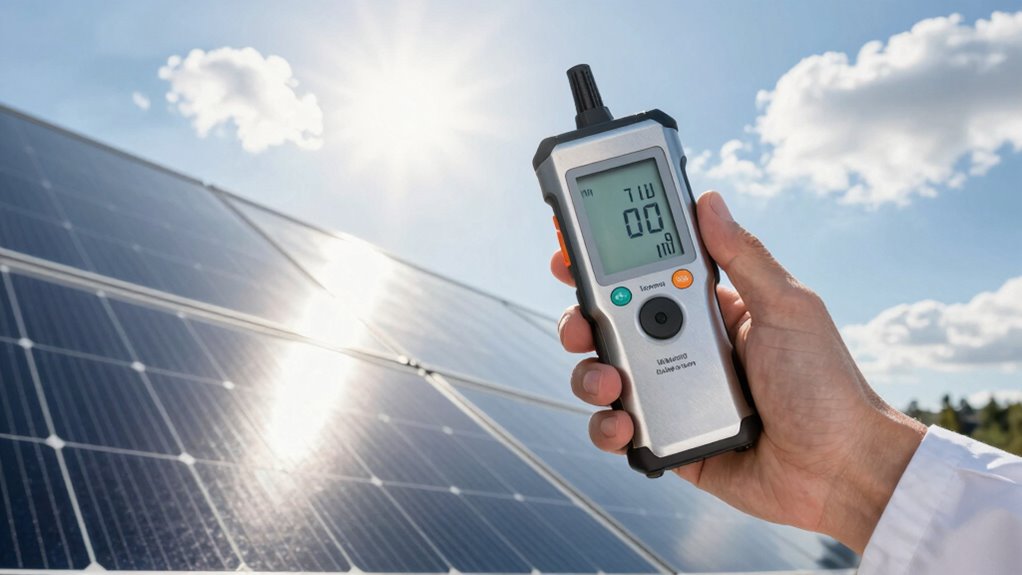
To measure irradiance accurately, you need specialized tools called pyranometers or solarimeters that detect the intensity of sunlight striking a surface. These instruments assess the spectral distribution of incoming light, capturing how different wavelengths contribute to overall irradiance. Proper measurement calibration is essential to guarantee data accuracy, as it aligns the instrument’s readings with standard references. Typical units for irradiance are watts per square meter (W/m²), which quantify the power of sunlight reaching a surface. Some advanced sensors can also provide spectral data, helping you analyze how various wavelengths impact energy calculations. Regular calibration and understanding of spectral distribution are crucial for reliable measurements, enabling precise assessment of solar resource potential and ensuring consistent results across different devices and conditions. Understanding spectral distribution enhances the accuracy of solar energy assessments by accounting for the effects of different wavelengths on energy output.
What’s the Difference Between Irradiance, Illuminance, and Solar Power?
Understanding the differences between irradiance, illuminance, and solar power is vital for accurately evaluating sunlight and its effects. Irradiance measures the power of sunlight hitting a surface per unit area, essential for solar thermal systems and assessing photovoltaic efficiency. Illuminance, on the other hand, quantifies how bright a space appears to the human eye, measured in lux, and isn’t directly related to energy transfer. Solar power refers to the total energy generated or available from sunlight, often expressed in watts or kilowatt-hours. While irradiance focuses on the intensity of sunlight, solar power considers the overall energy output, and illuminance relates to perceived brightness. Detecting passive voice helps improve clarity and ensures precise communication in technical explanations. Understanding these distinctions helps optimize solar applications and guarantees accurate performance evaluations.
How Does Irradiance Affect Solar Panel Efficiency?
Ever wonder how sunlight intensity influences the performance of your solar panels? Higher irradiance means more solar energy hits your panels, boosting their ability to generate electricity. When irradiance is strong, your panels operate closer to their maximum efficiency, producing more power. Conversely, low irradiance limits energy absorption, reducing output and overall panel performance. Variations in sunlight intensity throughout the day and seasons directly impact how well your solar energy system performs. To optimize results, understanding irradiance helps you anticipate energy production fluctuations. Ensuring your panels are clean and properly angled can also maximize their exposure to sunlight, making the most of available irradiance. Additionally, fluctuations in solar irradiance are influenced by factors such as seasonal changes and atmospheric conditions, which affect the amount of sunlight reaching your panels solar energy fluctuations. Recognizing the importance of time zone differences can also assist in planning optimal solar panel usage throughout different geographic locations. Environmental factors like atmospheric conditions can significantly alter irradiance levels, emphasizing the need for site-specific assessments to maximize efficiency. In short, irradiance plays a pivotal role in determining how effectively your solar energy system captures and converts sunlight into usable electricity, especially when considering solar panel positioning and local environmental factors.
Why Is Irradiance Critical for Plant Growth and Agriculture?
Irradiance directly impacts how efficiently plants perform photosynthesis, which is essential for their growth. When light levels are ideal, crop yields improve, and plants stay healthy. Understanding this relationship helps you optimize farming practices for better results. Additionally, monitoring light exposure ensures plants receive the proper amount of irradiance for optimal development. Recognizing how light intensity influences photosynthesis can lead to more precise control of growing conditions, ultimately enhancing plant health and productivity. Moreover, solar irradiance data can assist farmers in predicting and maximizing crop performance under varying environmental conditions.
Photosynthesis Efficiency Boost
Since photosynthesis depends heavily on the amount of light plants receive, irradiance plays a vital role in boosting their efficiency. When light intensity aligns with the ideal light spectrum, plants convert more sunlight into energy, enhancing their growth and productivity. Proper irradiance improves photovoltaic performance in natural and artificial systems, ensuring plants capture the right wavelengths for maximum photosynthetic output. By adjusting irradiance levels, you can optimize how plants absorb light, leading to faster growth rates and healthier crops. It’s not just about more light but the right light at the right intensity. This balance directly influences photosynthesis efficiency, helping your plants thrive and ensuring better yields in agriculture. Additionally, understanding accessibility features can help make information about plant care more accessible to a wider audience. High-quality irradiance management makes all the difference in plant health and productivity.
Crop Yield Optimization
Optimizing crop yields hinges on providing the right amount of light, as irradiance directly influences how well plants grow and produce. When irradiance levels are ideal, crop photosynthesis operates at peak efficiency, leading to healthier plants and higher yields. Adequate light also enhances photovoltaic performance in agrivoltaic systems, where solar panels and crops coexist. If irradiance is too low, photosynthesis slows, reducing growth and harvest quality. Conversely, excessive light can cause stress, damaging plant tissues. Managing irradiance ensures plants receive ideal light intensity for maximum productivity. Monitoring automation systems can help maintain optimal light conditions consistently. Understanding these light levels helps you fine-tune agricultural practices, improve resource use, and increase crop output. Additionally, understanding light intensity and its effects enables farmers to better adapt to seasonal and environmental changes. Ultimately, controlling irradiance is essential for achieving sustainable, high-yield farming systems.
Plant Health Maintenance
Maintaining healthy plant growth depends heavily on providing the right amount of light, as it directly influences vital processes like photosynthesis and nutrient uptake. Proper irradiance guarantees plants absorb sufficient soil nutrients, promoting strong development. Insufficient light can weaken plants, making them more vulnerable to pests and diseases, while too much can cause stress and damage. To optimize plant health, consider these factors:
- Balance light levels to prevent nutrient deficiencies or overloads
- Adjust lighting to reduce pest susceptibility
- Use targeted pest management strategies to protect healthy growth
How Do Climate and Weather Change Irradiance Levels Over Time?

Weather and climate fluctuations directly influence irradiance levels over time, causing noticeable variations in the amount of solar energy reaching the Earth’s surface. Climate variability, including long-term changes like global warming or cooling, gradually alters average irradiance patterns. Seasonal patterns, driven by Earth’s tilt and orbit, create predictable shifts in sunlight intensity throughout the year. During summer, you’ll notice higher irradiance due to the sun’s angle, while winter sees lower levels. Short-term weather changes, such as cloud cover or atmospheric aerosols, also impact irradiance daily or weekly. These factors combine to produce fluctuations that can affect solar energy projects, plant growth, and climate studies. Understanding how climate and weather influence irradiance helps you better interpret data and optimize solar-related applications.
Practical Tips for Measuring and Using Irradiance Data in Your Projects

To get reliable irradiance data, you need to use accurate measurement techniques, like properly calibrated sensors and correct placement. Once you have the data, interpreting it correctly helps you make informed decisions for your project. Paying attention to these details guarantees you use irradiance data effectively and confidently. Additionally, understanding the verification process ensures that your measurements are trustworthy and based on evidence. Proper data calibration is essential for ensuring the accuracy of your readings, and regular checks can help maintain measurement integrity over time.
Accurate Measurement Techniques
Accurate measurement of irradiance is vital for reliable solar project performance, and selecting the right tools and techniques can make a significant difference. To guarantee precision, focus on understanding the spectral distribution of sunlight, which affects how sensors respond. Proper measurement calibration is essential; regularly calibrate your instruments against standards to maintain accuracy. Use pyranometers designed for your specific application, and ensure they are properly positioned to avoid shading or obstructions. Keep in mind that environmental factors like temperature and dirt can impact readings, so perform routine maintenance. By paying attention to spectral distribution and calibration, you’ll obtain reliable data that truly reflects real conditions, leading to better insights and more successful solar projects.
- Regularly calibrate your sensors against recognized standards
- Choose pyranometers suited for your spectral requirements
- Maintain clean, unobstructed sensor placement
Interpreting Data Effectively
Once you’ve gathered reliable irradiance data through proper measurement techniques, interpreting that information correctly becomes key to enhancing your solar projects. Understanding how irradiance impacts your system allows you to make informed decisions for both solar thermal and photovoltaic efficiency. Look for patterns and fluctuations in the data to identify ideal angles and times for maximum energy capture. Recognize that higher irradiance generally boosts energy output, but other factors like shading and weather conditions also matter. Use the data to adjust system settings or plan maintenance. Accurate interpretation helps you avoid overestimating or underestimating your system’s potential, ensuring you maximize performance and return on investment. Clear, contextual analysis of irradiance data is essential for making your solar project successful. Additionally, being aware of measurement accuracy ensures that your data remains reliable and actionable.
Frequently Asked Questions
How Does Irradiance Vary With Geographic Location?
You’ll notice irradiance varies with your geographic location because sunlight intensity changes depending on latitude, altitude, and local weather pattern influence. In equatorial regions, solar panel efficiency improves due to higher and more consistent irradiance. Conversely, in higher latitudes, irradiance decreases, reducing efficiency. Weather patterns like cloud cover and seasonal changes further impact the amount of sunlight reaching your panels, making location a key factor in solar energy performance.
Can Irradiance Levels Be Predicted Accurately?
Think of irradiance levels as a weather forecast for your solar panels; you can predict them with growing accuracy. Advanced weather forecasting models and historical data help estimate solar panel efficiency under varying conditions. While exact predictions are challenging due to unpredictable factors like clouds, technology improves daily, giving you better insights. So, yes, irradiance levels can be forecasted with increasing precision, helping you optimize your solar energy system effectively.
What Are Common Challenges in Measuring Irradiance Outdoors?
You face challenges in measuring outdoor irradiance because sensor calibration is vital; if your sensors aren’t properly calibrated, data accuracy suffers. Weather conditions like clouds, dust, and humidity can cause fluctuations, impacting data consistency. Additionally, changing angles of sunlight throughout the day require careful adjustments, and sensor placement matters. To get reliable readings, regularly calibrate your sensors and consider environmental factors that could influence measurements.
How Does Atmospheric Pollution Impact Irradiance Readings?
You’ll find that atmospheric pollution lowers irradiance readings because poor air quality and pollution sources like vehicle emissions and industrial activities increase aerosols and particulates. These pollutants scatter and absorb sunlight, reducing its intensity reaching your sensor. As a result, your measurements might underestimate actual solar energy. To get accurate readings, monitor air quality conditions and consider pollution levels, especially during high pollution episodes when irradiance can be markedly diminished.
Are There Standard Protocols for Calibrating Irradiance Measurement Tools?
Yes, there are standard protocols for calibrating irradiance measurement tools to guarantee sensor calibration and measurement accuracy. You should regularly compare your sensors against certified reference standards, perform zero checks, and apply calibration factors as needed. Following guidelines from organizations like ISO or NIST helps maintain consistent and reliable readings, reducing errors caused by sensor drift or environmental factors. Consistent calibration is key to accurate irradiance measurements.
Conclusion
Understanding irradiance reveals the secrets behind solar performance and plant growth. But as climate patterns shift and weather fluctuates, the true impact of irradiance becomes even more vital—and unpredictable. Will you be ready to interpret these changing signals and optimize your projects? The next step could transform your approach, but only if you stay informed and adaptable. The future of solar and agriculture depends on how well you grasp and respond to irradiance’s hidden power.