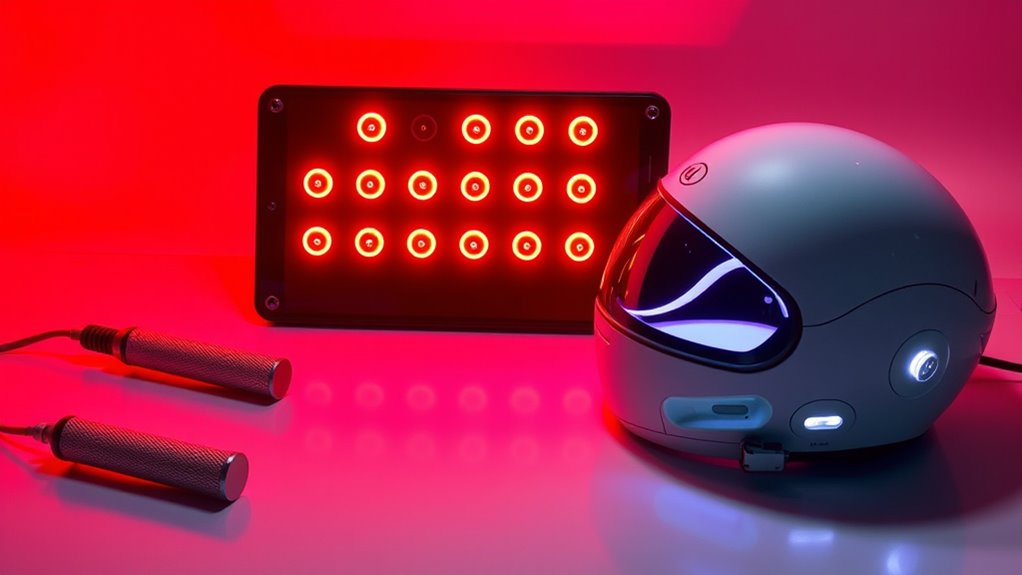

Choosing between red-light therapy wands, panels, and helmets depends on your needs. Wands are portable and precise, making them good for targeted treatment. Panels cover larger areas quickly and are great for regular sessions at home. Helmets focus on head and face areas, offering comfort and coverage. Consider your comfort, convenience, and the area you want to treat—more details can help you find the best fit for your goals.

Get wellness gear delivered free with Prime
- Fast, free delivery on millions of items
- Prime Video, Amazon Music and more included
- Member-only deals all year
Key Takeaways
- Wands offer targeted treatment and portability but may vary in durability and coverage compared to panels and helmets.
- Panels provide broad, hands-free coverage ideal for larger areas, with stability and adjustable features for comfort.
- Helmets deliver immersive, head-focused therapy with adjustable fit and padding, suitable for consistent head and face treatments.
- Durability depends on build quality; high-quality materials extend device lifespan across all types.
- The best choice depends on treatment area size, convenience, and user preference for coverage, precision, and comfort.

Red-light therapy devices have gained popularity for their potential health benefits, but choosing the right one can be challenging with so many options available. When comparing devices like wands, panels, and helmets, it’s essential to consider factors such as device durability and user convenience. Durability ensures that your investment lasts over time, while user convenience affects how easily you can incorporate therapy into your daily routine.
If you’re eyeing a wand, you’ll find that its compact size makes it highly portable, allowing you to target specific areas with precision. However, not all wands are built equally. Some feature robust construction with high-quality materials, making them resistant to wear and tear, while others may feel flimsy or prone to breakage. Opting for a wand with sturdy construction means you’ll get more longevity from your device, reducing the need for replacements. Additionally, user convenience plays a big role—look for ergonomic designs that are comfortable to hold, lightweight, and easy to maneuver. A device that’s intuitive to operate, with simple controls and clear instructions, will save you time and frustration during use.
Panels, on the other hand, typically cover larger areas, making them ideal if you want a quick, hands-free experience. The durability of panels varies depending on the build quality and materials used. High-end panels often feature sturdy frames and protective coverings, ensuring they withstand regular use without damage. They also tend to be more stable during treatment sessions, which adds to user convenience. Panels that come with adjustable stands or mounts help you position them comfortably, reducing strain and allowing you to relax during therapy. When selecting a panel, consider the size and weight—larger panels can be cumbersome if not designed for easy setup, so look for options that balance coverage with manageable weight.
Helmets provide an immersive experience, especially for targeting the head and face. They usually boast durable shells made from sturdy plastics or composites, but the internal components and wiring should also be well-made to handle frequent use. A durable helmet can withstand daily wear and tear, ensuring your sessions remain uninterrupted. User convenience with helmets hinges on fit and comfort—look for adjustable straps, padding, and lightweight designs. A comfortable helmet prevents fatigue and encourages consistent use, which is key to seeing benefits over time. Also, check how easy it is to put on and remove—clunky or complicated designs can discourage regular use.
Frequently Asked Questions
How Do I Choose the Right Device for My Skin Type?
To select the appropriate device for your skin type, start by evaluating your skin sensitivity—if you have sensitive skin, opt for a device with lower wavelengths and gentle settings. Check device compatibility with your skin concerns and make certain it offers adjustable intensity levels. Consider your skin tone and condition, and consult reviews or a dermatologist if unsure. This way, you’ll find a device that’s safe and effective for your unique skin needs.
Are Red-Light Therapy Devices Safe for Sensitive Skin?
If you have sensitive skin, red-light therapy devices can be safe if you follow safety precautions and choose device compatibility carefully. For example, someone with sensitive skin used a gentle, lower-heat wand and saw positive results without irritation. Always start with shorter sessions, avoid overuse, and check if the device is suitable for sensitive skin. Consulting a dermatologist can help make certain of safe, effective treatment tailored to your skin.
Can I Use These Devices Alongside Other Skincare Treatments?
Yes, you can use red-light therapy devices alongside other skincare treatments, but it’s important to take into account your skincare routine and any complementary treatments you’re using. Always follow the device instructions and consult with a dermatologist if you’re unsure about compatibility. Combining red-light therapy with your existing routine can enhance results, but avoid overdoing it to prevent irritation or adverse effects. This way, you maximize benefits safely.
What Is the Average Lifespan of a Red-Light Therapy Device?
Think of your red-light therapy device as a reliable partner—on average, it lasts about 50,000 hours of use. Its durability depends on the build quality, but most come with warranty coverage that safeguards your investment. Proper care can extend its lifespan, ensuring you get the most out of your device. Regular maintenance and following manufacturer instructions help your device stay effective and functional for years to come.
How Do I Maintain and Clean My Red-Light Therapy Equipment?
To maintain and clean your red-light therapy device, regularly wipe it with a soft, damp cloth to remove dust and skin oils. For device sterilization, avoid harsh chemicals; instead, use a gentle disinfectant suitable for electronics. Store your equipment in a cool, dry place, away from direct sunlight, and keep it covered when not in use. Following these storage tips and cleaning routines helps extend your device’s lifespan and assures safe, effective treatments.
Conclusion
So, which device suits your needs best—wand, panel, or helmet? Each offers unique benefits, but the right choice depends on your goals and lifestyle. Do you want targeted treatment or full-face coverage? Consider how much time you can dedicate and your budget. Ultimately, selecting the right device can boost your wellness routine. Isn’t investing in your health worth exploring different options? Choose wisely and enjoy the potential benefits of red-light therapy.
Halloween Picks
halloween
As an affiliate, we earn on qualifying purchases.