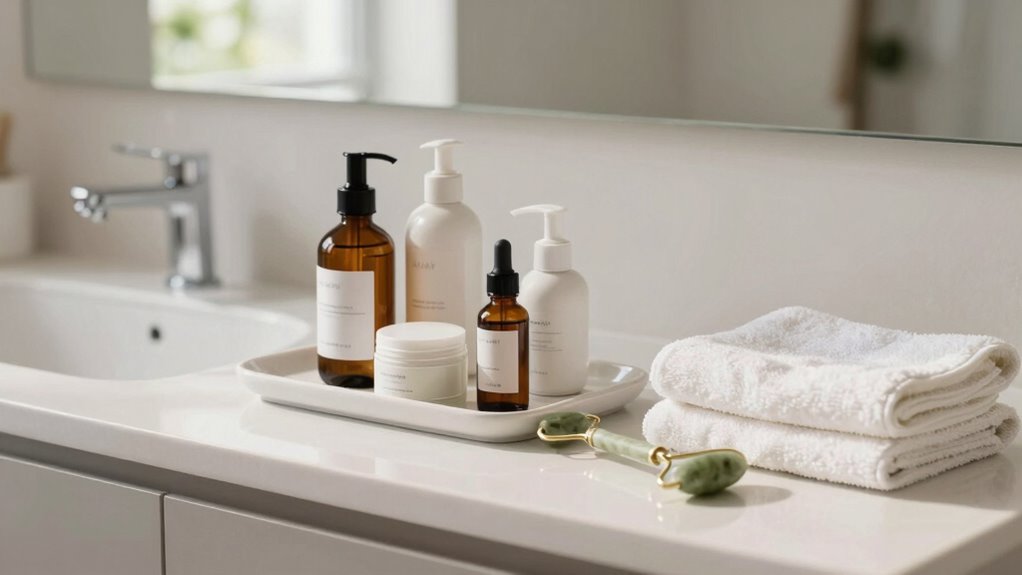

A simple, consistent routine works best for fading post-acne marks because your skin heals gradually and needs steady care. Rushing or constantly changing products can irritate and delay healing. Stick to gentle cleansers, regular moisturizers, and sun protection. Use effective ingredients like niacinamide or vitamin C, but avoid harsh treatments. Patience is key, and keeping things boring guarantees better long-term results. If you want to learn how to keep your routine effective and straightforward, keep going.

Get wellness gear delivered free with Prime
- Fast, free delivery on millions of items
- Prime Video, Amazon Music and more included
- Member-only deals all year
Key Takeaways
- Consistent, simple routines support the skin’s natural healing process better than frequent changes or complex treatments.
- Gentle cleansing and moisturizing daily help maintain skin barrier health, promoting gradual scar fading.
- Avoiding aggressive treatments prevents irritation, which can delay healing of post-acne marks.
- Using stable ingredients like niacinamide or vitamin C over time enhances skin repair without causing damage.
- Patience and routine consistency yield better long-term results than flashy or constantly evolving skincare routines.
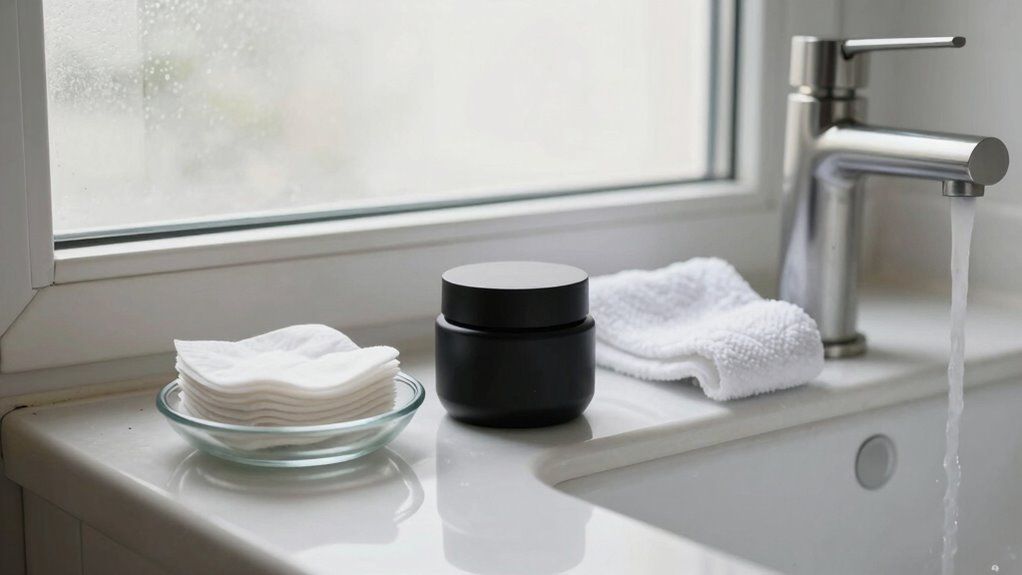
Have you ever wondered how to effectively fade those stubborn post-acne marks? It’s a common struggle, especially when dealing with pimple scars that seem to stick around longer than you’d like. The truth is, skin healing isn’t an overnight process, and rushing treatments often hampers your progress. When you stick to a simple, consistent routine, your skin responds better. That’s because your body needs time to repair damaged tissue, and complicated or constantly changing routines can disrupt this natural healing process.
Consistent, simple routines support natural healing and help fade stubborn post-acne marks over time.
The secret to brighter, smoother skin lies in boring routines that are easy to follow day after day. You don’t need an elaborate collection of products or aggressive treatments. Instead, focus on gentle cleansing, regular moisturizing, and sun protection. Cleanse your face twice a day to remove dirt, excess oil, and impurities that can clog pores and worsen pimple scars. Use a mild cleanser that respects your skin’s barrier; harsh scrubs or scrubbing too vigorously can irritate your skin and slow down healing. After cleansing, apply a moisturizer suited for your skin type to keep your skin barrier healthy. When your skin is well-hydrated, it heals more efficiently, reducing the appearance of pimple scars over time.
Incorporate a broad-spectrum sunscreen every day, even when it’s cloudy. UV exposure can darken scars and make them more noticeable. Keeping your skin protected from the sun is a key part of any routine aimed at fading post-acne marks. You don’t have to try intense or trendy treatments to see results. Instead, focus on consistency and patience. Over time, your skin’s natural healing processes will work better with simple, boring routines.
Sometimes, people get tempted to try quick fixes like peeling agents or overly aggressive products, but these can irritate your skin and delay healing. Instead, opt for products with ingredients like niacinamide or vitamin C, which brighten skin and support collagen growth. These can help improve pimple scars gradually without causing undue irritation. Remember, skin healing takes time, and the most effective routines are often the simplest. Stay consistent, be patient, and avoid the urge to switch things up constantly.
In addition, understanding the importance of biodiversity and its role in natural skin health can inspire you to adopt more sustainable and gentle skincare practices. Incorporating plant-based ingredients into your routine can sometimes provide more gentle support for your skin’s natural healing processes. Recognizing the significance of microbial diversity in your skin’s microbiome can also help you choose products that promote a healthy balance of bacteria, which is crucial for skin healing. In the end, your skin will thank you for sticking to a dull but reliable routine. It’s not about flashy treatments or complicated steps; it’s about understanding your skin’s needs and respecting its natural healing rhythm. Keep it boring, keep it gentle, and watch your post-acne marks slowly fade away.
Products Worth Considering

LEVOIT Vital 200S-P Smart Air Purifier for Large Rooms

Hyperice Normatec Elite Wireless Compression Boots, Standard Size

Philips Sonicare 5950 Rechargeable Electric Toothbrush with 2 Brush Heads, Pink
As an affiliate, we earn on qualifying purchases.
Frequently Asked Questions
How Long Does It Take to See Results From Post-Acne Mark Routines?
You can start seeing results from post-acne mark routines in about 4 to 8 weeks. Be patient, as skincare myths often lead people to expect quick fixes, but consistent use of product ingredients like niacinamide or retinoids makes a difference over time. Stick with a simple routine, avoid unnecessary products, and remember that boring routines are often the most effective. Results vary based on skin type and severity.
Are Natural Remedies Effective for Fading Post-Acne Marks?
Herbal remedies and home remedies can be effective, but they’re not magic. While some natural ingredients like aloe vera, lemon juice, or turmeric might lighten scars over time, results vary. Unlike simple, boring routines, these remedies require patience and consistency. You might see some fading, but don’t expect quick fixes. For best results, combine natural remedies with a straightforward skincare routine, and always patch-test before trying new treatments.
Can Diet Influence the Healing of Post-Acne Scars?
Yes, your diet impacts scar healing. Consuming foods rich in vitamins A, C, and E, along with zinc and antioxidants, can boost your body’s ability to repair skin and fade post-acne scars. Staying hydrated also supports healing. Focus on a balanced diet with fruits, vegetables, nuts, and lean proteins to speed up recovery. Avoid processed foods and sugar, which can slow down the healing process and worsen scars.
How Often Should I Exfoliate During My Routine?
Exfoliating is like watering a delicate plant—you don’t want to overdo it. You should exfoliate 2-3 times a week, alternating between chemical exfoliation and physical scrubs. Chemical exfoliation is gentler and dissolves dead skin, while physical scrubs provide immediate smoothness. Avoid daily scrubbing, as it can irritate your skin and worsen scars. Stick to a consistent, simple routine for the best post-acne scar healing.
Is It Necessary to See a Dermatologist for Post-Acne Marks?
You don’t necessarily need a dermatologist for post-acne marks, but consulting one can be helpful. Many skincare myths suggest at-home remedies are enough, but cosmetic procedures like laser treatments or chemical peels can be more effective. Seeing a dermatologist guarantees you get personalized advice and safe options. While some treatments are simple, professional guidance can prevent worsening your marks and help you choose the right approach.
Conclusion
Stick to a simple routine and be patient—sometimes, less really is more. When you keep things boring and consistent, your skin has a better shot at healing naturally. Don’t rush the process or chase quick fixes; acne scars need time to fade. Remember, Rome wasn’t built in a day. Trust in the power of steady, uncomplicated care, and you’ll see better results without adding unnecessary stress. Good things come to those who wait.